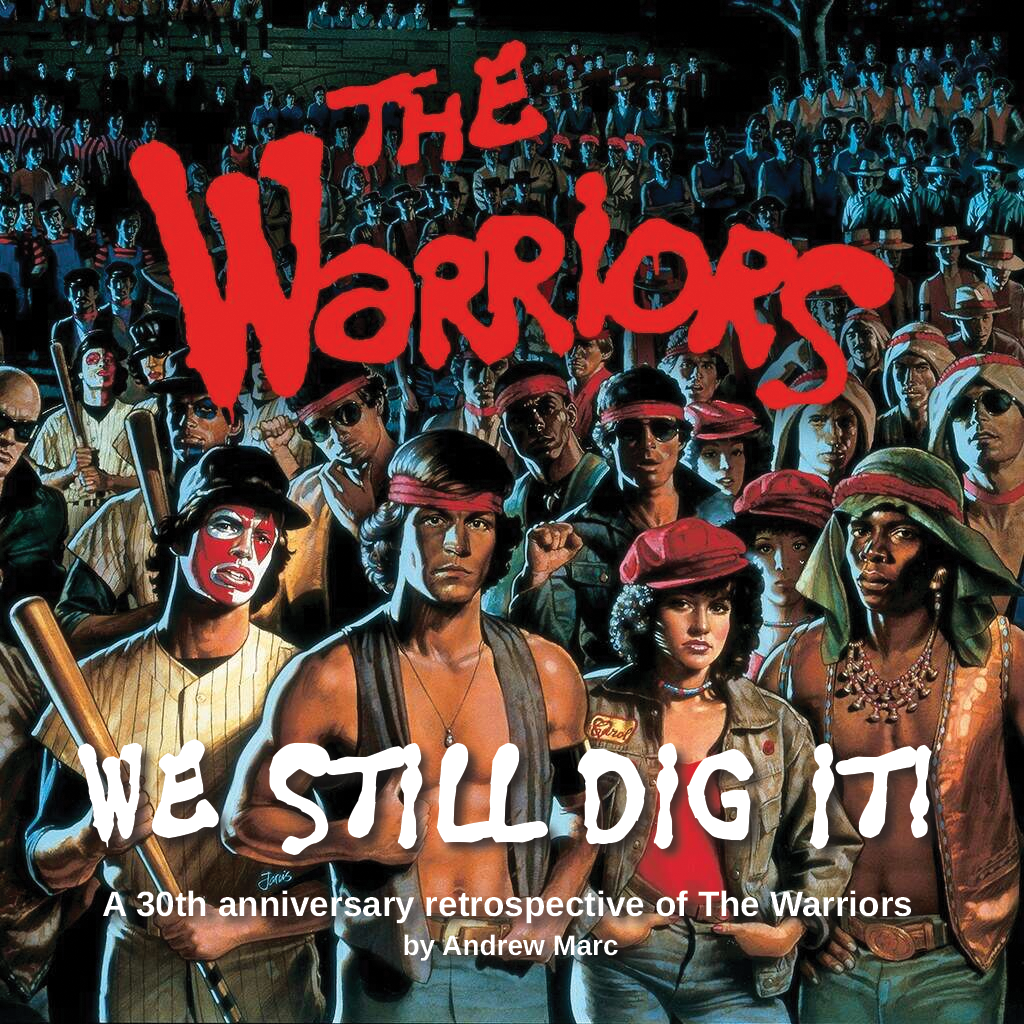
This year is the 30th Anniversary of the surreal, iconic and stylised 70’s cult classic, The Warriors, a a much loved and cult status New York gang film directed and co-written by Walter Hill in 1979. The provocative and eye catching poster yelled: “These are the Armies of the Night. They are 100,000 strong. They outnumber the cops five to one. They could run New York City.”
The Warriors is a kinetic and edgy tale of bravery and self-belief – “visual rock” enthused Pauline Kael of the New Yorker at the time; both subversive and ideological, but marred on its initial release by real life violence apparently incited by the film – shades of Clockwork Orange. It’s not an intellectual offering and doesn’t try to be. It’s gang violence writ large, against a neon washed, graffiti smeared and grimy New York, almost all of it filmed at night.
The screenplay was based on the book of the same name written by Sol Yurick, himself a New Yorker. He in turn based his novel on the Greek tale Anabasis by Xenophon, detailing the true story how in the 4th Century BCE a detachment of the Greek army became stranded 1000 miles behind Persian enemy lines but successfully fought their way home.
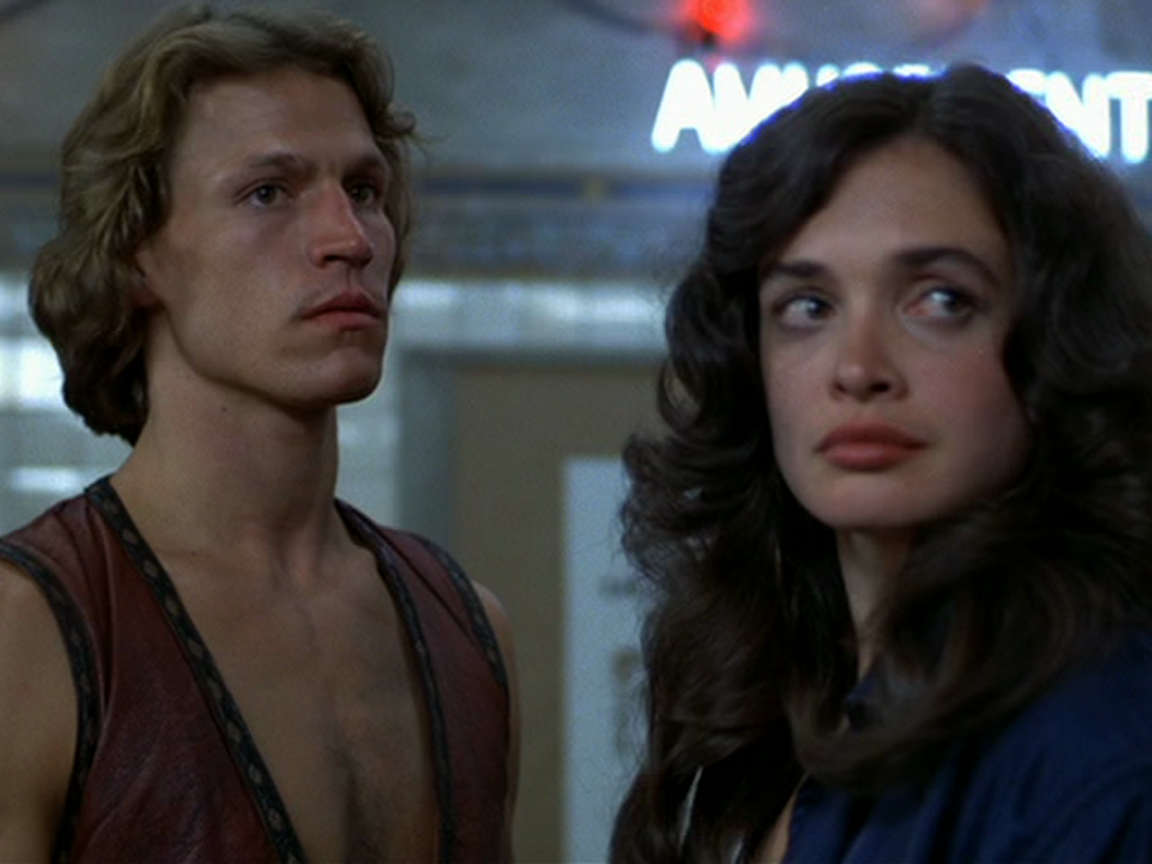
The premise is simple enough. A Coney Island gang called The Warriors attend a large gang meeting (conclave) in The Bronx, meant to unify all the gangs of New York against the City and, as they see it, the oppressive state system. The charismatic leader of the meeting, Cyrus (Roger Hill), head of the Grammercy Riffs gang, is shockingly murdered by The Rogues, headed by the psychopathic Luther (David Kelly), who smuggles a pistol in. The Warriors are unfortunately framed for the murder. All but one manage to escape as the NYPD move in force to break up the illegal gathering, and, led by Swan (Michael Beck), the remainder of the group are forced to fight their way back to Coney Island, past the police and all the other wild gangs of the City who are now after them, falsely believing their treachery.
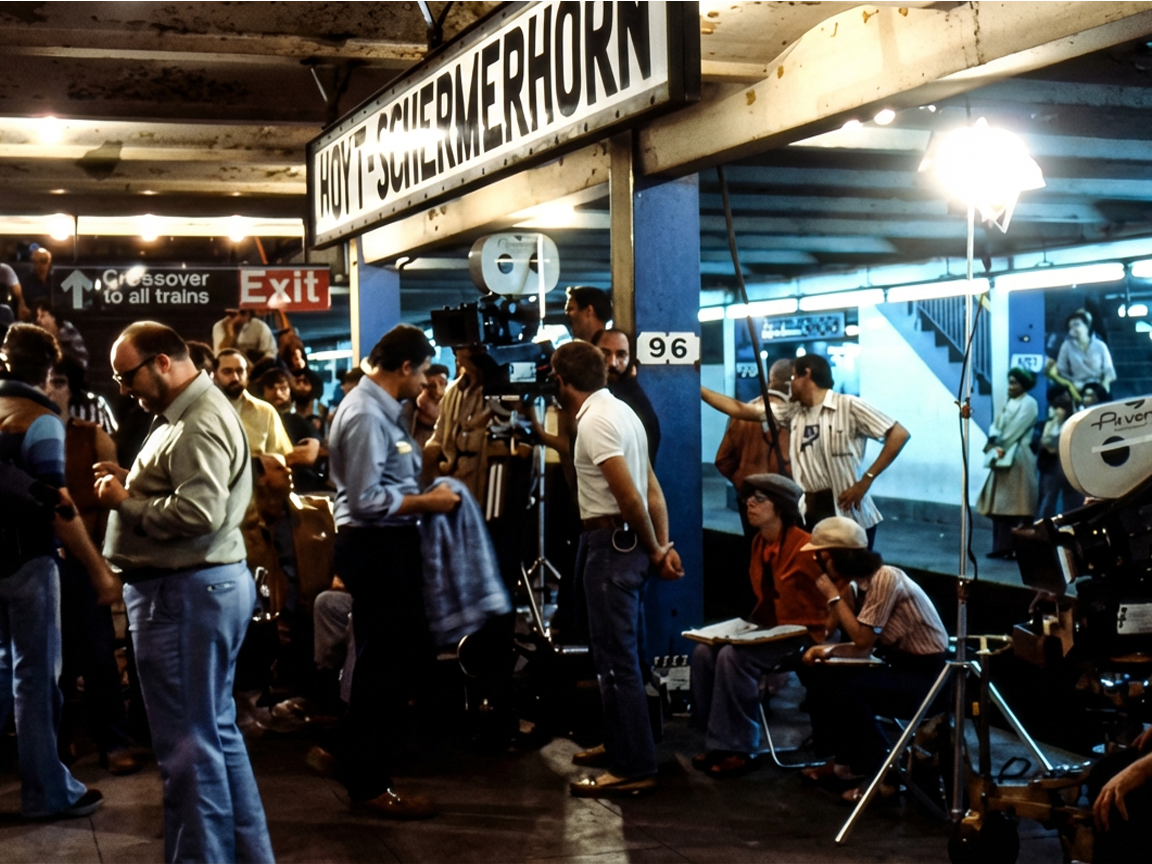
What sets this apart from other 70s gang movies are the unique elements. Action director and movie maestro Walter Hill at the helm for a start. The hyper-cool DJ voice over insert shots (voiced by the late, great Lynne Thigpen) for another, first urging the gangs on then finally apologising The Warriors, all while dropping some seriously cool tunes. The gritty urban real life locations: run down subway stations, graveyards, dark and foreboding parks, back streets and alleys. In fact the only readily recognisable part of New York is Coney, and that was awful as well. Seedy gang hangouts, toilets, shacks, tube tunnels and underneath piers. It’s about as un-glamorous as you can get. Yes, a perhaps over used 70s visual trope (Taxi Driver / Death Wish / Mean Streets), but director Hill managed to create an almost surreal feel to it. It’s like a particularly bad dream.
For those of a certain age, The Warriors has a fond place in our film consciousness – we remember how we relished the trippy, comic book style violence, the bizarre and some times ludicrous New York gangs created for the film, the lurid and moody cinematography, Pekinpah-esque slow-mo fight scenes and even perhaps the teenage fantasy of being part of a cool gang, bopping our way through the enemy and getting the girl at the end, all emphasised wonderfully by the fantastic synth-rock score by Barry De Vorzon.
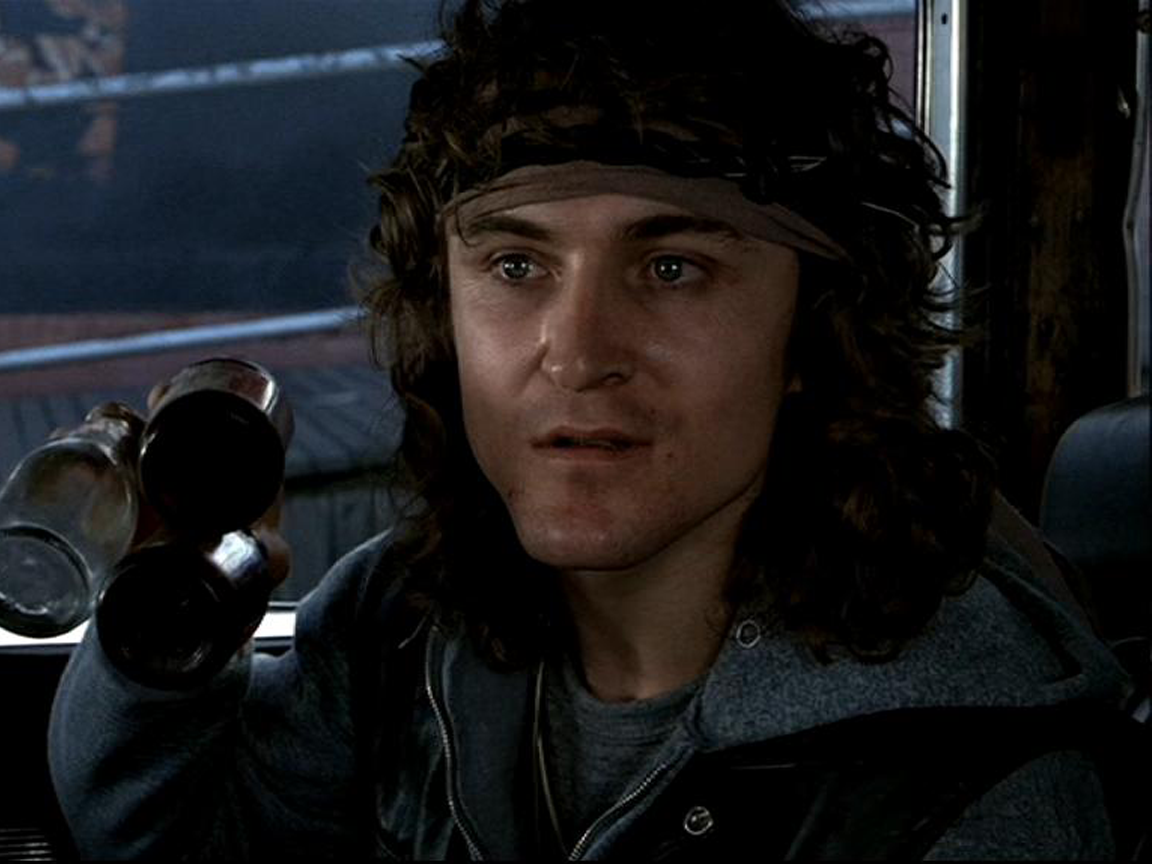
It’s over the top, unintentionally hilarious in places, but it still gets under your skin. To fans, the fictional and fresh-faced gang members are still like old friends – Cleon, Swan, Cochise, Cowboy, Rembrandt, Snow, Vermin, Ajax, Fox and their tag along companion, Mercy. Compared to modern gang films, the movie retains a certain innocence and honour, where fights were visceral one-on-one scraps and not the brutal or sadistic conflicts as often portrayed today.
‘Today’s society is impatient,’ says Apache Ramos, who played one of The Orphans gang, who delivered one of the best lines in the film – “We’re gonna RAIN on you Warriors!”. ‘Nowadays everybody has mobile phones, the internet. When I had fights at school, it was with our fists, and some of the people I fought are now my best friends. Nowadays, gang members just shoot each other.’ He is currently a social worker working with gangs and youths in the Bronx.
Walter Hill, the director, originally envisioned the film as a comic book style treatise, and as can be seen in the recently released director’s cut, he has returned the look of the original to what he first intended, with wipes, cartoon graphic freeze frame of the action and captions for each new plot thread. This new look angered many of the film’s original fans, who felt it something of a travesty to tone down the grittiness of the original, now considered a genre classic.
A new generation was introduced to The Warriors when software company Rockstar released the game of the same name in 2005, to critical acclaim. Featuring the voice talent of many of the original actors, and hyper-violent action like their previous releases of the Grand Theft Auto series, the game was very faithful to the original film, and unashamedly subversive.
To mark the 30th anniversary of The Warriors, a film screening in Coney Island, together with a cast Q&A and signing took place a few weeks ago. Tickets sold out almost instantly. In all, some 220 fans came from all over the US, and even some from Europe. The event was held at the Coney Island Sideshow, run by Coney Island Arts Foundation, a non-profit arts organisation founded by Dick Zigun, who moved to Coney in the 70’s after living in Miami. He has been helping to run the sideshow for some 30 years, and explained the continued fascination of The Warriors and what Coney Island means to him today.
‘If there was a hip-hop pantheon of great movies, Scarface is number one, Warriors is number two,’ Dick enthuses. He describes how the Coney Island and general grime and fear factor of 70s New York has long since passed. ‘The reputation of being dangerous or seedy is a good ten years out of date. New York has become incredibly gentrified. The only problem now (in Coney) is that there is a lot of empty property and people want to see it start re-building … but there is very little fear factor in the neighbourhood.’
However, he goes on to explain that there are still active gangs in the Coney neighbourhood, but that the stereo-typical gang image is not quite so black and white as people believe. ‘There have been and remain gangs in Coney Island … to this day. You have to understand that when you get into the mind-set of a police officer or a film maker, life is not so clear cut – the gangs are gangs; gangs are also social members and self help organisations in the ghetto and housing project communities.’
Zigun, whilst expounding the social network aspects of modern gangs, also acknowledges there is a down-side to them – ‘… by joining with a group of similar people, similar age, similar lack of options, creating an identity, and dressing in a way … sure, sometimes it gets into violence, sometimes gets into illegal behaviour, but it’s also a support network and self help and child care and shared opportunity.’
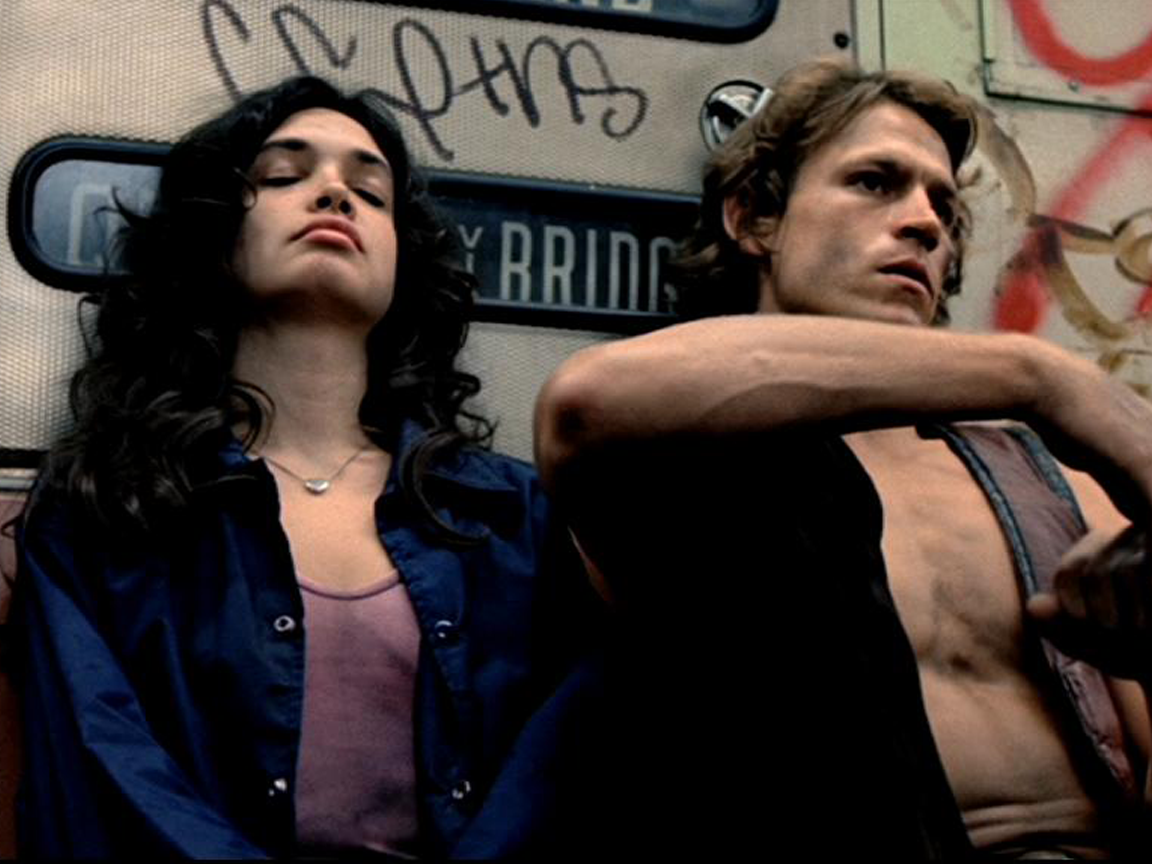
Beyond the theatrical violence in the film and sometimes crass dialogue lay a quite poignant social message regarding gang culture, poverty and social inequality. This is effectively portrayed in a subway scene where Swan and Mercy, a runaway from another gang, sit opposite two couples returning from a prom. The disparity between the two – the gang members filthy, grimy, bruised and exhausted contrasted with the expensive attire and fresh faces of the up-towners – is strongly evinced without need for dialogue, and remains probably the most revealing moment of the movie.

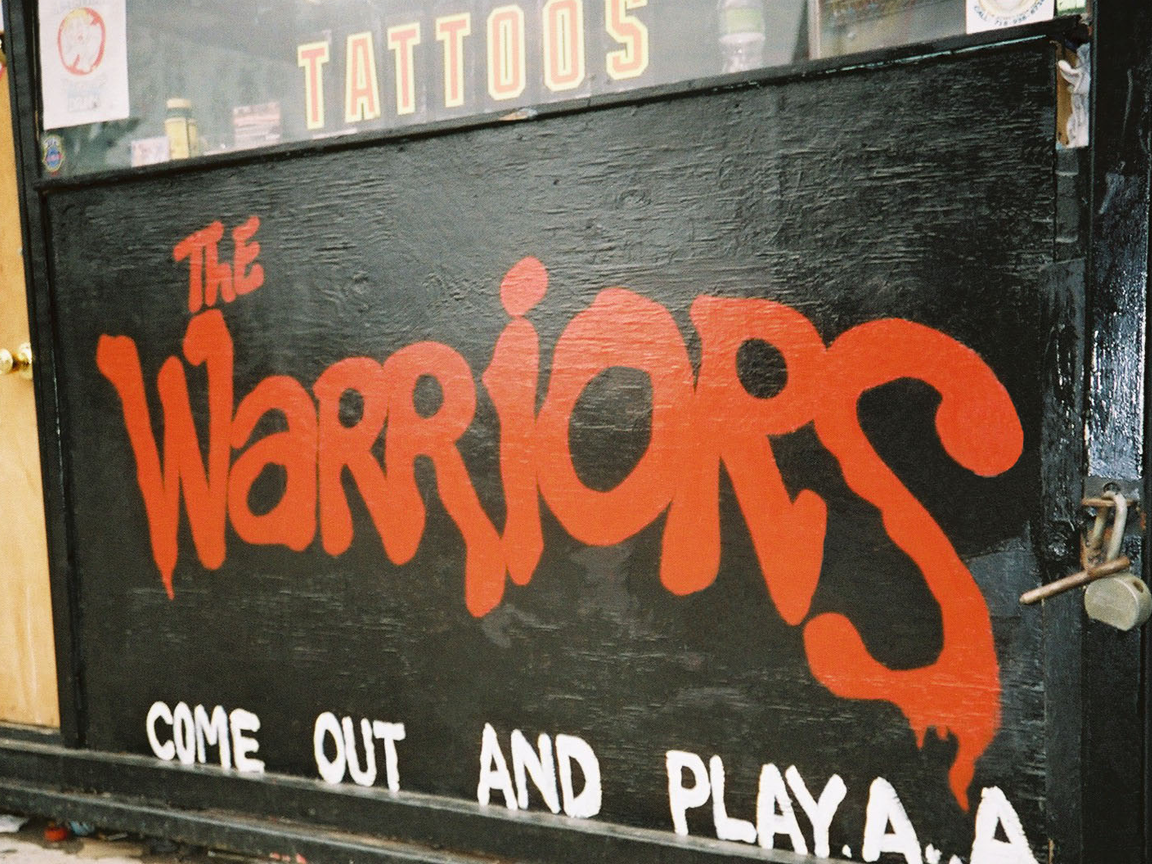
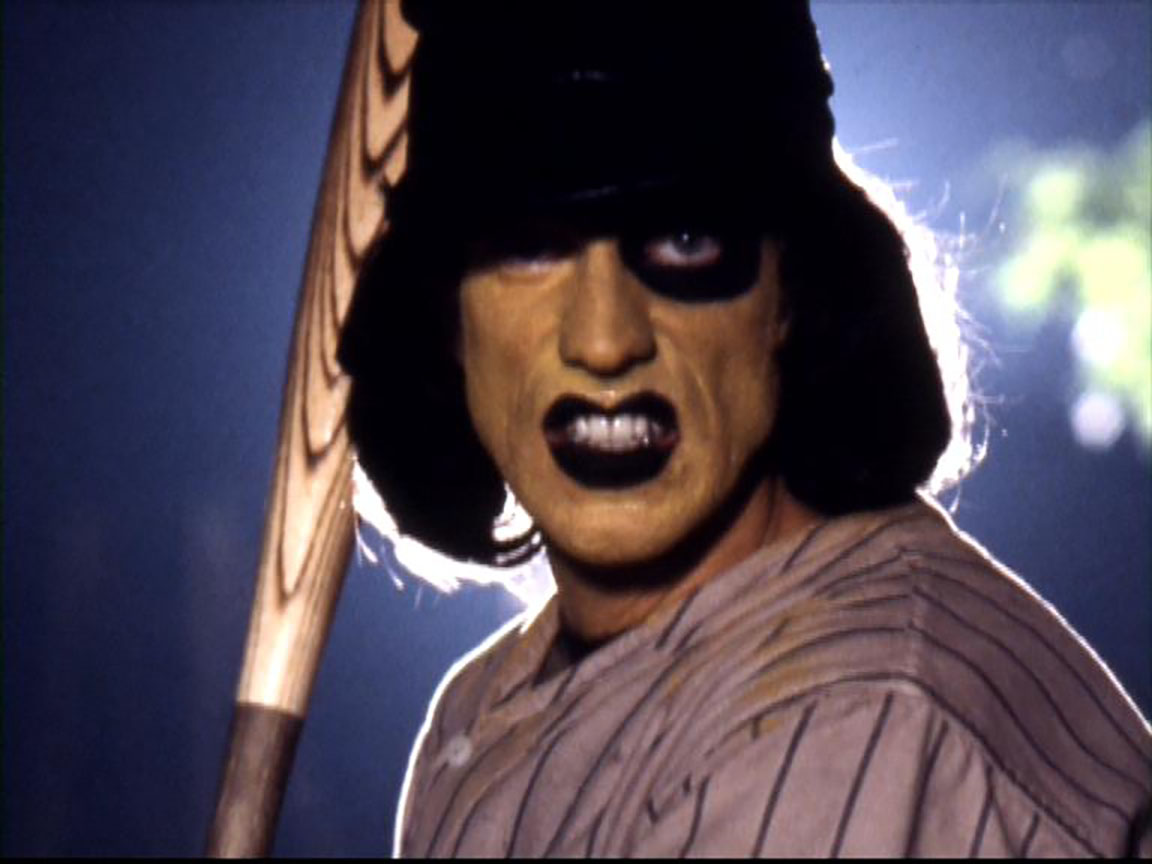
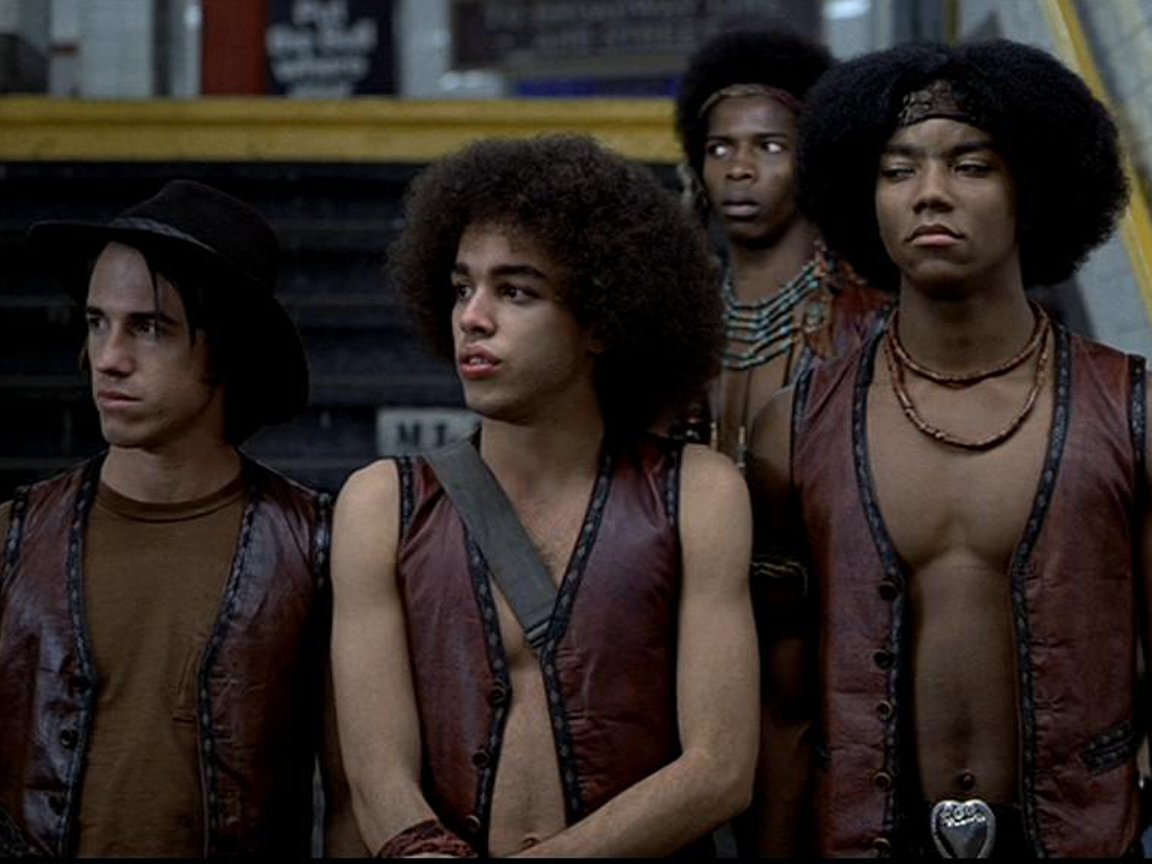

When it was filmed in 1979, conditions were quite different from today, although there are large project housing estates dominating the Coney highline still. The filming of Luther’s now famous improvised scene, where he taunts the Warriors “Warriors! Come out to pl-aay-aaay!” – was consistently interrupted by a group of a local youths, who, at the time, were against the concept of the Warriors gang being on their real turf. One of the group was Eddie Sorvino, now in his mid-40s.
With his friends he co-founded Coney Island’s real life gang, TF – Together Forever – which now has members in 47 countries. Sorvino found that the camaraderie and protective strength of the gang inspired him, where school and social services had not. He talks about what The Warriors meant to him. ‘Well, it definitely gave us a sense of pride, finally on the map now! And behind the Warriors here, we have our own organisation, Together Forever, and that’s you know, we were inspired by The Warriors. How they stood together.’
‘When it started, we were all misfits, we all came from broken homes, abuse, drugs, stuff like that. So what we did, as teenagers, we bonded together, we formulated the crew, TF, Together Forever, and we stuck together. You know, at the beginning, we did a lot of bad things, we were young guys, we didn’t know, but as we grew older, grew wiser, we started mending our ways and turning everything around and doing much more for the community as opposed to the system holding us down.’
Eddie still keeps in touch with the actor David Harris (Cochise), one of his original inspirations for founding his own gang. ‘We help the homeless, we started a baseball team, we made swimming trips, took (locals kids) on camping trips, I mean we did a lot of things. We’re also in the music business as well. I mean there’s just so much that we contribute to a lot of things we never get credit for.’
Coney Island, apart from the Brighton Beach boulevard, is much like a slightly run down UK seaside town. But any menace that might have existed several decades ago has gone – Dino’s iconic Wonderwheel remains (memorably in the opening shot of the film), as does the amusement park, strangely timeless against the backdrop of the Hudson river, and thousands of tourists continue to flock in the summer season. To the east, about half a mile, is the Russian quarter, populated originally by Jewish Russian immigrants and exiles.
To the west is a small baseball park, with the Close Encounters of The Third Kind-esque lighting contraption looming large above it, contributing not a small amount to the general strange feel of the area.
Stillwell metro station is still the main stop for Coney, but is not the original, as seen in the film, which was demolished in the 80s. However, many of the original locations can still be visited, such as the avenue the Warriors walk down when being shadowed by the hearse filled with Rogue gang members, but the actual final scene on the beach was filmed on Long Island – “totally out of our control” lamented Michael Beck (Swan) when die hard fans expressed dismay at this fact.
Nevertheless, the local Coney Islanders are fiercely proud of the movie – indeed Warriors T-shirts and imitation gang vests can be bought in the area – locals keeping the spirit alive, The Warriors flame still burning.
After 30 years, it is perhaps surprising that the low budget movie still garners the respect and following that it does today. Matt Beckoff, who runs myfavouriteceleb.com, a booking site for celebrity events and conventions, manager of The Warriors actors and instigator of the anniversary event said of getting the original actors to attend that “they jumped at the chance!” Deborah Van Valkenburgh, who played Mercy, was not in attendance, but did attend an earlier signing with some other cast members at a comic convention in New Jersey.
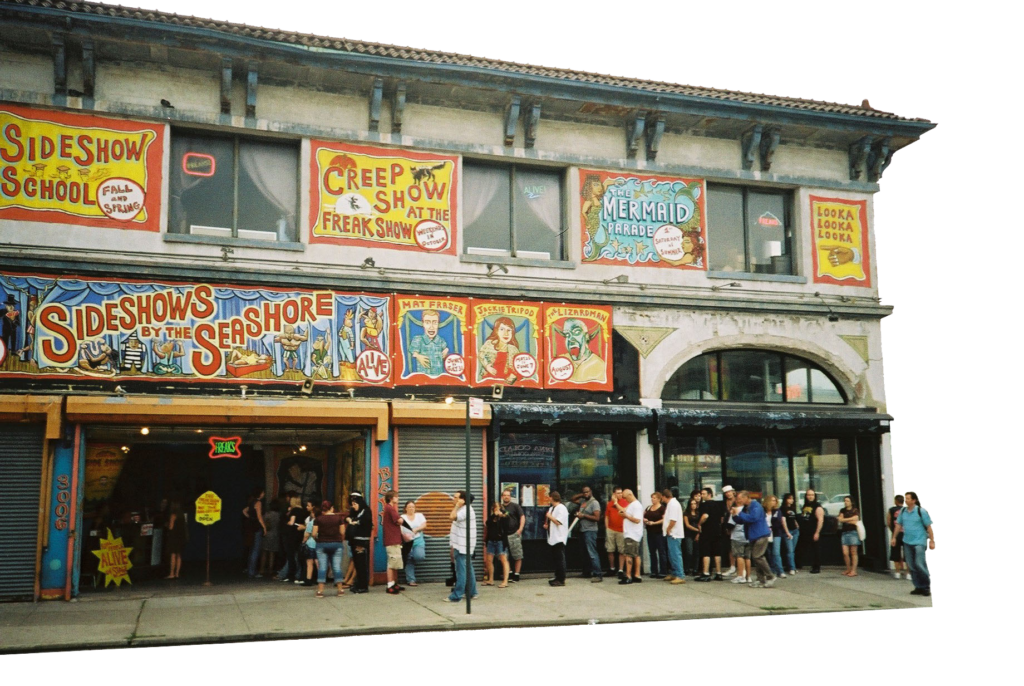
Although the Coney Island Sideshow screening venue was fairly small, with the film being shown on video projection rather than film, the atmosphere was very lively and electric. The fans – “some of the best in the world” says Beckoff – were overwhelmed by the turnout of the original actors. Six in all held the stage and took questions, Michael Beck (Swan), Apache Ramos (deputy Orphan), David Harris (Cochise), Terry Michos (Vermin), Brain Tyler (Snow) and Thomas G. Waites (Fox) who was unceremoniously sacked from the shoot due to arguments with the director Walter Hill. Today, he is frank about the episode, stating that “I got fired from the movie for being a pain in the ass!”
You could still sense camaraderie between the assembled former cast members, who in turn were impressed by the turnout and response of the event. It was a rare chance to see a main body of the original cast an the actual location of the film. They stayed for a second screening and audience Q&A, not leaving until nearly midnight. It was a wonderful testament to their loyalty to the film and the superb fan base still very much in evidence. The actors seemed rightfully proud of their parts in the film, and indeed cult movie history. The present day Coney gang, Together Forever, remains as a testament to the powerful message and social importance of the film.
Gang founder Eddie Sorvino summarises his defining motives: ’We didn’t do it to gain any popularity and credit, we did it for the community because they can see that we can unite and stay together. And saying you can overcome and achieve anything – that’s what we set out to achieve.
‘Just keep on pushing through all the time. And hopefully, some day at the end of the tunnel, we’ll get to the light.’
Today, Coney Island is being slowly gentrified and made ever more tourist friendly, but around the weathered façade, the original warrior spirit of the film can be felt – under the shadow of the Wonderwheel, above the extensive wooden-floored Brighton Beach boulevard, in the soft, misty breeze of Hudson Bay and the various commercial outlets scattered throughout the place.
As the finishing song goes, “Somewhere out on that horizon, out beyond the neon lights, I know there must be something better …..” The film’s underlying message of hope and eventual triumph against overwhelming resistance still burns brightly and is surely the main reason for it’s continued massive cult status and appeal. And, yes, of course we all still dig it!
© Andrew Marc