MARK BALDWIN
Interview by Andrew Marc
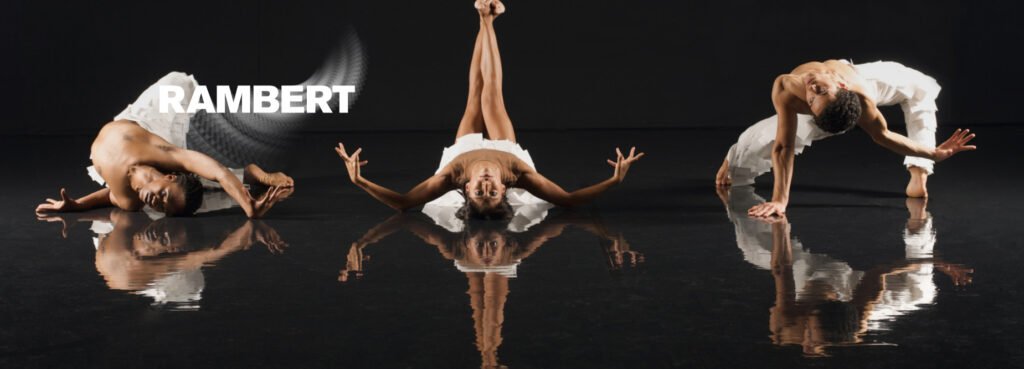
RAMBERT – BRINGING BALLET TO BRITAIN
“Contemporary dance is the
art form of the future.”
In 1926, the Polish born dancer Marie Rambert (originally Cyvia Rambam) founded the Ballet Club in London. Born to a Russian mother and Polish – Jewish father in Warsaw, she was inspired to dance by Isadora Duncan. Moving to Paris, she continued her dancing career, studying with Émile Jaques-Dalcroze, before being invited to study in Ballet Russes in Berlin by Sergei Diaghliev. She worked with the legendary dancer and choreographer Vaslav Nijinsky then moved to England in 1914, continuing her studies under Enrico Cecchetti.
After teaching ballet for several years, she created her own dance company in 1926, originally entitled Ballet Club, later being renamed as Rambert Dance Company. It was situated at her husband’s (Ashley Dukes) Mercury Theatre in Notting Hill, London. It was the first ballet company in the UK – pre-dating the founding of The Royal Ballet by five years, and was patronised by such luminaries as Sir Frederick Ashton, Anthony Tudor and Agnes de Mille. Rambert is credited with helping to found and maintain the ballet community in Britain.
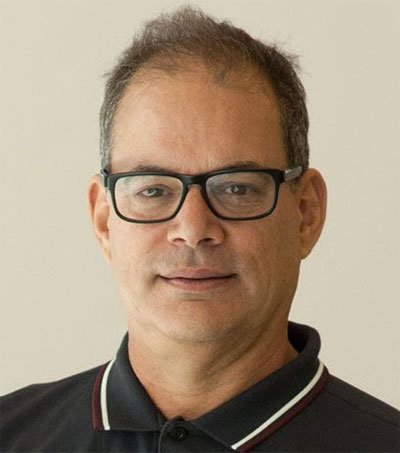
Rambert Dance Company is now internationally famous for their sensational performances, highly trained dancers, wide repertoire and innovative multi-disciplined concept productions. They produce modern dance pieces predominantly, having re-imagined their modus vivendi in 1965, but still see traditional works performed. Mark Baldwin (pictured left), a former dancer with the Rambert Dance Company, has been their artistic director for 10 years, re-joining them in 1992 after a period away furthering his training.
He talks passionately and loquatiously about his work and his career, almost without pause, and is clearly extremely proud of what he does and what he and his company have achieved in recent years. ‘I was actually a dancer for them in the 80s. I had a lovely time as a dancer there. I really got to do some beautiful roles and I also got to develop myself as a choreographer and so basically I’ve worked for the company for over 20 years. But not continuously. I had ten years between when I was away developing myself as a choreographer.’
On being appointed as artistic director in 1992, beating some 50 other contenders, he explains : ‘I think that I got the job because I am a choreographer, and I was able to learn about dance and dancers and music and putting movement on stage. I understand that because I made my first piece when I was 21 and I have really developed that skill over the years. It takes a very long time.
‘The company itself is producing people who rise to the top and actually come back and work for the company once they have developed all their skills – running a company, choosing dancers … and being artistic director, you actually get to put all those into practice.’
LABYRINTH OF LOVE – THE MAIN PIECE
The title of the tour and the main piece of the four part show has been inspired by love songs written by seven women throughout history, and covers a period of around 2000 years. The renowned soloist, Kirsty Hopkins sings live at every performance, accompanied by a live orchestra and incredible projected video images.
Choreography is by Marguerite Donlon (Director of Ballet at the Saarländischen Staatstheater, Germany), costume design by Conor Murphy and the score by Grammy award winning composer Michael Daugherty. It contends to cover the whole spectrum of the vagaries of love : bitterness, desire, longing, ecstasy, irony, tenderness, despair, hope, sadness and humour associated with the heart.
‘We’re got Kirsty because the whole tour – the main piece, well the first piece in the evening, is called Labyrinth of Love and there is a soprano on stage. We’ve got these amazing films by an artist called Matt Collishaw, and the images in the film … go with the songs. And it’s love songs through the ages, all written by women. And the oldest song is supposed to be about two thousand years old or something like that. But then it all comes up to the present day.’
THE OTHER DANCES : AFTERNOON OF THE FAUN (L’APRES MIDI D’UN FAUNE), WHAT WILD ECSTASY AND MONOLITH
Afternoon of the Faun
Shocking at its first showing in 1931, causing riots and general clamour at the theatres it played at, Nijinski’s ballet simmers with erotic subtext and allusion. It has a classical foundation inspired by his deep appreciation of images of fauns and satyrs on ancient Greek and Egyptian vases he saw in museums – strong profile poses, graceful strength, timeless poise.
‘It is pretty erotic. It’s actually a 100 years old last year because it was premiered in 1912 and actually, in those days, you couldn’t have ballets about sex without dressing him up as a faun and having nymphs and it’s incredible music by Debussy of the same name, Afternoon of a Faun and it’s done in profile because Marie took Nijinsky to the British Museum … he wandered into the Egyptian, and the Greek rooms so he noticed on vases all these athletes in profile, so the whole piece is done in profile, so they walk flat to the front, and dance flat to the front the whole time.’
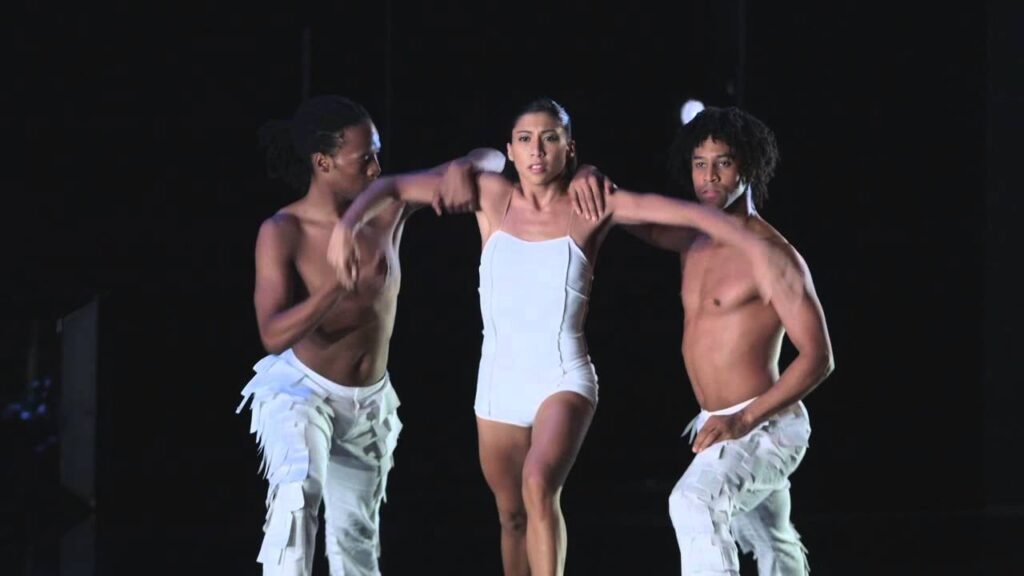
What Wild Ecstasy
Mark has partnered Afternoon of the Faun with a contemporary companion piece, entitled What Wild Ecstasy. Scored by Gavin Higgins, who was influenced by forest noises near his Forest of Dean home (copulating foxes and pounding music from illegal raves), Baldwin describes it as ‘a contemporary response to a 100 year old piece’ and Higgins’ score has been called “pulsing and feral”.
Monolith
Monolith is by a British choreographer, Tim Rushton, who runs a company in Denmark, the Danish Dance Theatre. It’s his Rambert debut, and is inspired by “mystical energies that haunt sites of man-made gathering places.” The powerful score is by Peteris Vasks.
THE DANCERS
“Our dancers are faster, they dance harder and bigger and better than any other company I can think of.”
Rigorous training, prime physiques and complete dedication mark out the Rambert Dance Company performers. 20 in all are on the tour (two unfortunately remain ill and are unable to join the group). This level of intense performance, however, means professional dancing is very much a young person’s vocation and Mark is quite pragmatic about this.
‘Our dancers are faster, they dance harder and bigger and better than any other company I can think of. Dancers only last as long as footballers do, and that’s 35 – max. We have got a couple of dancers who go on more than that, with exceptional talent, but generally speaking they are athletes of the theatre. It’s a really wonderful and intense career – and then they’re lucky because they’ve got the opportunity to have another career. Or work in different aspect of dance – they can be teachers, they can be Pilates teachers, some of them go to University … I think because of the discipline and rigor – they retrain very, very well.
‘We’ve got some fantastic young dancers which we’re going to bring to Brighton as well as a group of dancers that have been with me for the journey – some of them coming up for ten years, so it’s wonderful to see this range of wonderful young talent – incredible actually – I found myself in tears the other night watching one of the young dancers on stage for the first time. Amazing.’
BACK IN BRIGHTON
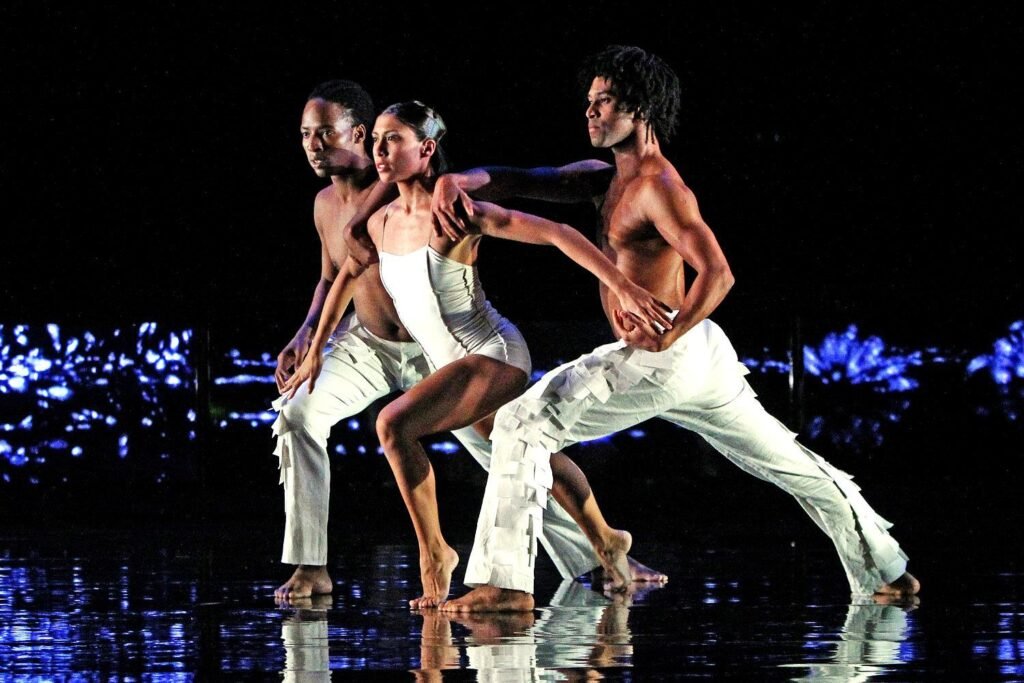
The Rambert Dance Company have been putting on shows in Brighton since the 1930s, meaning there is a long standing connection with them and this city. The Theatre Royal is one of the few remaining period theatres that they perform in – and they are now associate companies. Mark, who attended the celebrations on its 200th Birthday, speaks very fondly of it.
‘It’s not a very big stage for our dancers (but) I think they look quite comfortable on it. And the good thing about Brighton is that the audience are very close so it’s quite an intimate theatre. It’s lovely in that way. And of course we’re bringing our own orchestra, so the music is live. Brighton is so charming to come to as well. It’s probably one of our very smallest theatres, but it’s very charming and atmospheric. We love it.’
For more information, visit:
www.rambert.org.uk