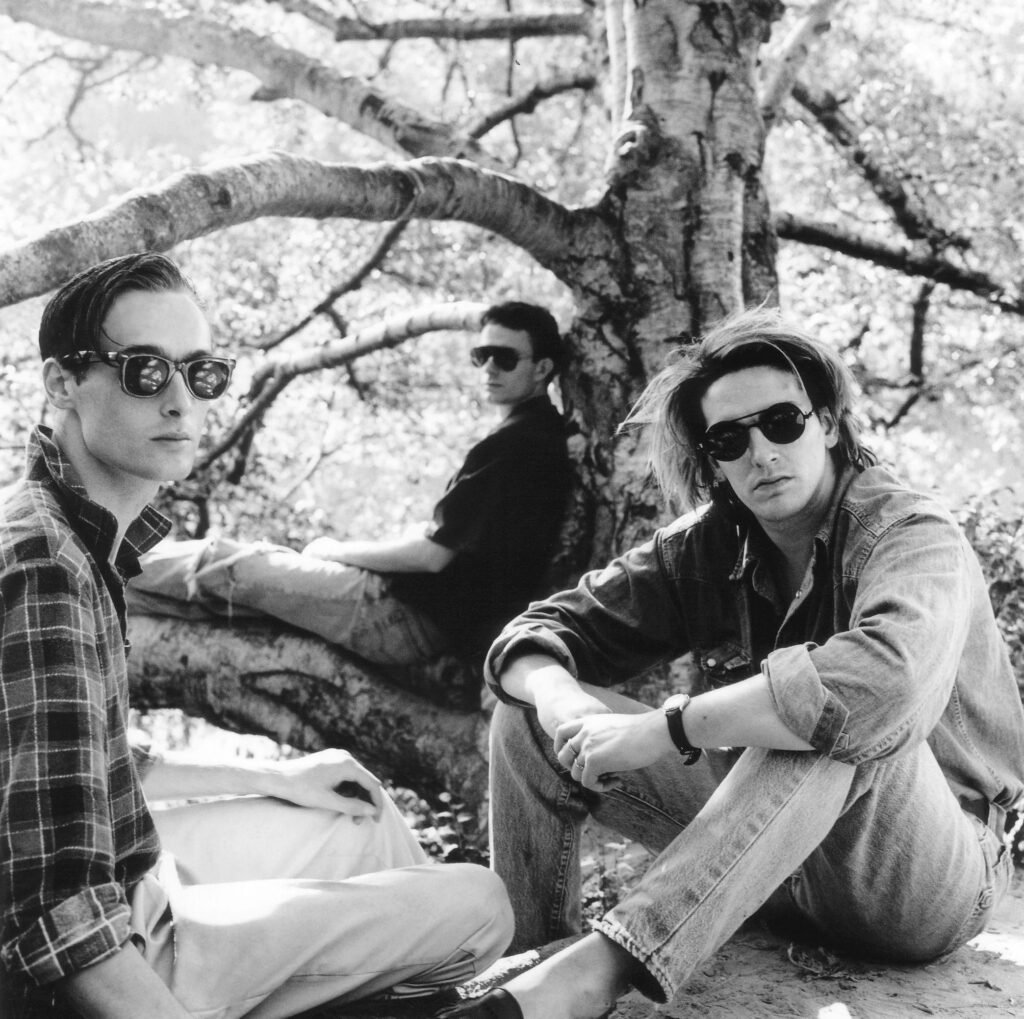
RENEGADE SOUNDWAVE, the subversive and acoustically anarchic South London underground band, started life in 1986. Kray Twins, their first 12” single (on the Rhythm King label), was released in 1987, crashing in on the fast evolving musicscape of the time, side by side with the sly angst of Pop Will Eat Itself, the anarchic noise of Jesus Jones and the kick-arse attitude of Age Of Chance. Unique, forthright, with witty, cynical lyrics laid over a monsterfest of bass, drum and dub riffs, it was instantly additive, sonically shocking – and exceptionally loud.
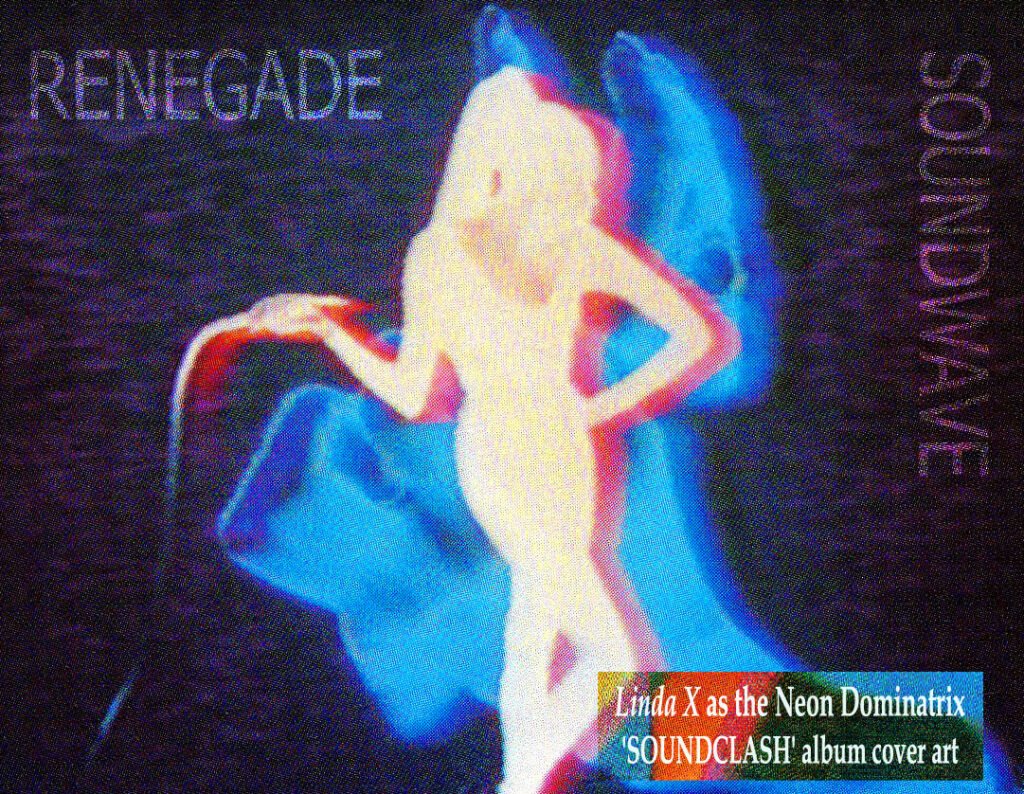
Following this groundbreaking release, John Peel gave them air time, and soon followed an NME front cover. Renegade Soundwave – Carl Bonnie, Gary Asquith and Danny Briotett had blasted their way onto the scene with a most spectacular track. Leaving Rhythm King behind for being too “restrictive”, RSW signed to Mute Records. Here, they found the creative freedom they needed, producing their first album, Soundclash. Strangely, Kray Twins and Cocaine Sex, their second single, were excluded, and only one track from the album ever charted; the catchy and amusing Probably a Robbery.
Nevertheless, it remains a contemporary, urban collection; a heady mix of downbeat breakbeats, guitar samples, and curious, searing percussion. It occupies a head-space well ahead of its time, and is arguably one of the most eclectic, sublimely disturbing and inspirational albums of the decade. Unfortunately, perhaps because of its very ambiguous nature, it did not sell particularly well. Carl Bonnie left the band because of ‘creative differences’, leaving Asquith and Briotett to continue surging forward under the RSW banner.
The band continues to produce ingenious and unpredictable work, and whilst largely uncommercial, a loyal, and ever growing fan base exists, mainly built up by word of mouth and white label 12” play in London clubs. RSW’s back catalogue sells very well through MuteBank, Mute’s new, and successful mail order service, with around 50% sales to America as opposed to 25% here in the UK. They are due to release their next album, In Dub, later this year.
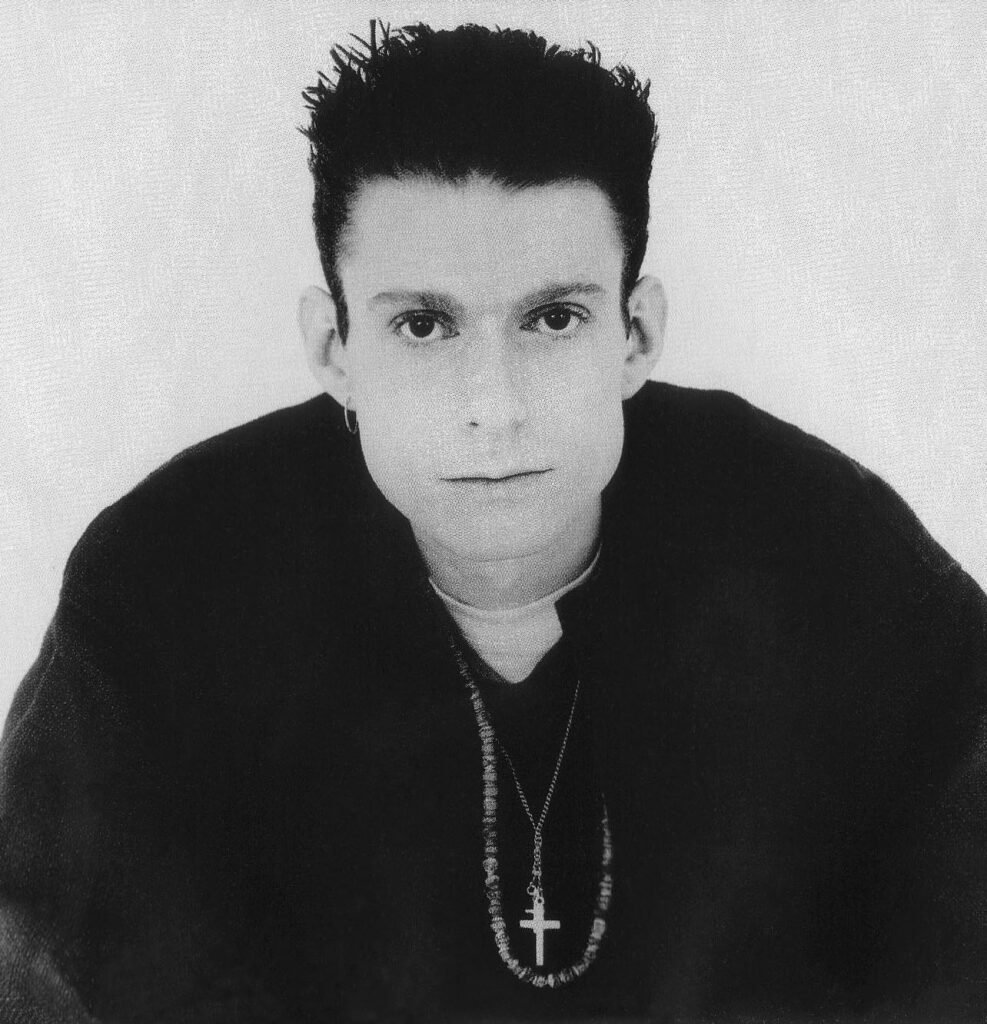
I arranged to interview Danny Briotett, drummer and percussionist, and the somewhat less wild looking of the Soundwave duo, at Mute Records, North London, Danny greets me in the corridor, slightly bleary eyed. It transpires that there was a Depeche Mode party the night before, which had obviously continued well into this morning. He is casually dressed, and understandably wired, dragging on a ‘special’ cigarette to wind down from the night before.
Making our way to the top of Mute Studios, it becomes evident why RSW have found a productive home. Julian Briotett, Danny’s brother, is a resident sound engineer, for one thing. Then there’s the enigmatic Daniel Miller, founder of Mute, a long time supporter of left field, avant-garde bands, who has successfully cultivated a relaxed and progressive working environment. Sound gurus Paul Kendall and Flood often work out of these rooms, and of course, synth-meisters Depeche Mode and Erasure are right down the corridor.
Danny and I take up seats near one of the vast mixing desks in the top studio, and I begin by asking him about their first track which had made such an impression, and whether, as some critics suggested, they had deliberately released such a provocative sounding track for the inevitable publicity it would generate. However, he dismisses this notion simply. “It was just one of our songs. We had about eight or nine songs and that was just the one we decided to do first. Cocaine Sex was the second, and Biting My Nails was the third, and they’re all old songs that we’d had for a long time. There was no real game plan or anything like that.
“Wherever you go in the world you’ll
find someone who’s got Cocaine Sex.”
‘I think a lot of people think we were trying to be shocking ….. but we really weren’t, because we’d had these songs for so long anyway they were just like perfectly natural to us. At the same time there were other songs that were just about things totally unrelated to anything sordid – there was Lucky Luke and there were songs that were . . . not pleasant, but just normal.’
It is undeniable though, at least at that early stage, Gary Asquith, RSW’s song writer, seemed to have a penchant for all things salacious, and perhaps what is surprising is that Cocaine Sex sold a lot better than Kray Twins, despite explicit lyrics. ‘Wherever you go in the world, you’ll find someone who’s got Cocaine Sex’, Danny reveals.
‘You go to Egypt, or you could go to America, or the Far East – wherever you go you’re going to find someone who’s got that record. It’s strange. It got no airplay in this country whatsoever. It did get played on the radio in America … they love that record.’
The Cyberpunk cover was designed by the band themselves, featuring the original three as cyborgs.
The primary modus operandi of Renegade Soundwave is their original, inventive use of sampling – they were one of the first groups to fully exploit and develop this now widely used technique, starting out Kray Twins memorably with the News At Ten intro. music, and using gunshot and slamming car door samples as bass, snare or percussion effects, and fierce, hardcore sonic loops as background.
It was, I remarked, a pretty insane debut. ‘Yeah, it’s a mad record, really, looking back on it. At the time, everything seemed really normal. I didn’t listen to it for years, then a couple of years later we were up here one night and we were doing something else, and we just put it on, and it was like ‘fucking hell, I see why people thought it was a bit strange!’
Danny is a self confessed veteran of the various sound-system set-ups that appeared on the scene in the 80’s. “That was where we came from in a sense. I used to go to sound systems as a kid, when I was growing up – that was as much an influence as anything else. That and the sort of punk thing, I guess. I was in school in the late Seventies in London, and if you were around in that time . . . . punk was the attitude, and Reggae was the music.”
It was through these interests, and DJ’ing around clubs that Danny met the other members of the band. “We just sort of knew each other from around, when we were younger. There was originally the three of us, and I used to do stuff with Gary, and I used to do stuff with Carl, then eventually a few things came together and we started playing. We used to rehearse as a live band really ….. just drums, bass and vocals was all it was, and then when we started making records.
‘Those were the sort of things that shaped our outlook when we first started. You’ve got the attitude from punk . . . I think the thing about punk was it was supposed to be you could do what you like – it wasn’t like a set form of music where you have to keep on repeating it – there’s no rules – fuck all that Eric Clapton and all that stuff – you can just go and do whatever you like. I think that’s the sort of attitude that we’ve kept up today. I think we’ve influenced a lot of people – so I’m told, anyway, but we’ve never tried to capitalise on that, or follow any band-wagon.’
Following Soundclash, RSW’s music slowly evolved, as Briotett and Asquith experimented with more fusion of styles, less layered tracks, and less reliance on dub-overkill. Where the awesome Phantom 12” shattered previous dance floor expectations, and Space Gladiator had its own curious appeal, In Dub, their next album, has a much more personal ambience, taking the RSW experience out of the club and into the living room, perhaps the ultimate spliff experience.
‘With this album we’ve got live tracks with guitars, we’ve got a lot of different elements coming in to play than we had before. It’s not strictly working with samplers and computers – there’s a lot of live stuff mixed in with it. I think we’ve just got more proficient at what we do. We know our way round the studio a lot more.’
Unfortunately, record companies quickly caught onto the trend for recycling music as sampling took hold like wildfire, and started clamping down, hard. “The thing is, in those days, nobody knew what sampling was. There were no laws, nobody was getting sued, and really, we were one of the first groups to make whole tracks out of samples, or based around samples and ….. you could sample anything in those days and you could get away with it, so it was never like ‘Oh shit, should we use that, or should we use this?’
“ … you could sample anything in those
days and you could get away with it …”
‘You’ve got to be really careful. Especially in America – we’re on Electra which is part of WEA – they’ve got a . . . panel of judges if you like – you have to clear all your samples through them. When you release a record they just sit in a room . . . they’re quite young, but there’s lawyers attached to them and they just listen to the record, listening out for samples. If there’s anything in there that they think is a sample, then they make you tell them where it comes from and the onus is on you to clear it, and if you don’t, and the record company gets sued.’
Ironically, perhaps, Danny himself is involved in a lawsuit with Nintendo, who ‘borrowed’ a section of Biting My Nails for one of their adverts. ‘Yeah, they just took the whole track basically, and they stuck a couple of bits and pieces behind it from Led Zeppelin and used it in the advert. I don’t mind them using it, because it’s fine – the actual advert looks quite good. I’ve got no problem being associated with it or anything, it’s just you’ve got to get paid for that sort of stuff,’ laments Danny, looking as perplexed as he is pissed off. ‘It’s a nightmare really. The whole thing’s a nightmare.’ The case has been dragging on for two years.
With the release of the album imminent, I ask whether they intend to tour it, and whether they foresee any problems with translating intensely studio produced tracks to the stage. “We don’t gig at all. We’re going to for this album, but we’ve never really put our heads in that direction. We’ve always been more into the studio side of things, but you’ve got to do it … it’s just the way – before it was really hard to try to translate what we do in the studio into a live thing because it’s so reliant on technology.
“I’ve just driven through fucking Texas in
my pick-up truck to hear Kray Twins man!”
Especially one particular fan ….. ‘We get bikers turning up sometimes – we had Hell’s Angels at one gig. Then we met one geezer once who wanted to hear Kray Twins, and we said we weren’t playing it – and he was a big red neck – ‘I’ve just driven through fucking Texas in my pick-up truck to hear Kray Twins, man!’
‘You know, we’re researching into it a bit more now – we’re trying to get into it a bit more – we’re going to incorporate some sort of live element, so we’ll probably have a drummer and use a guitarist for certain things. I want to get into a live dub a lot more – doing two sets – one just straight songs and the other later on that’s fucked up and dub stuff – just improvising ….. and in America they’re very much into the live thing.’
‘It doesn’t matter what type of music it is – they like going to see live shows. And if you go to a town – say you go to Dallas and you do a night at the same time you’ll be on the radio everywhere and the press, you’ll generate a lot of publicity, and next time people come back. You get more people. We’ve got a good turn out when we played and next time will be better. You’ve just got to do that really. I mean bands like Depeche Mode – that’s how they got so big, by constantly touring. Constantly taking their thing around. We just thought we’d just have to make records and that would be it, but it doesn’t necessarily work like that.’
I’m certainly looking forward to seeing RSW’s live peformance, and with such an unpredictable band, it will be interesting to see where they take their unique post-apocalypic brand style of tunes. As I make my way down through the maze of Mute Records, Danny, top geezer that he is, hands me a collection of their early videos. “You’ll like these,” he grins, before disappearing off. Back to the Depeche Mode party no doubt.
© ANDREW MARC