STEVEN CHIVERS
Interview by Andrew Marc
In the world of British cinematography, Steven Chivers occupies a quietly formidable position. Trained in fine art at Central Saint Martins, Goldsmiths and the Royal Academy, he emerged from the experimental film culture of the late 1970s and early 80s — a generation that moved fluidly from structural cinema to music videos, and from there into features and high-end commercials.
His early career intersected with directors like Richard Stanley on cult films such as Hardware (1990) and Dust Devil (1992), productions that have since taken on near-mythic status for their visual ambition — and their logistical chaos.
When we met at Soho House in London, Chivers was candid, sharp, occasionally mischievous, and refreshingly unsentimental about the business of film making. What follows is not a polished, slick industry narrative. It’s a raw cinematographer’s account of what really happens when art, egos, weather, budgets and weather collide.
PART I
Baptism by Fire – Hardware
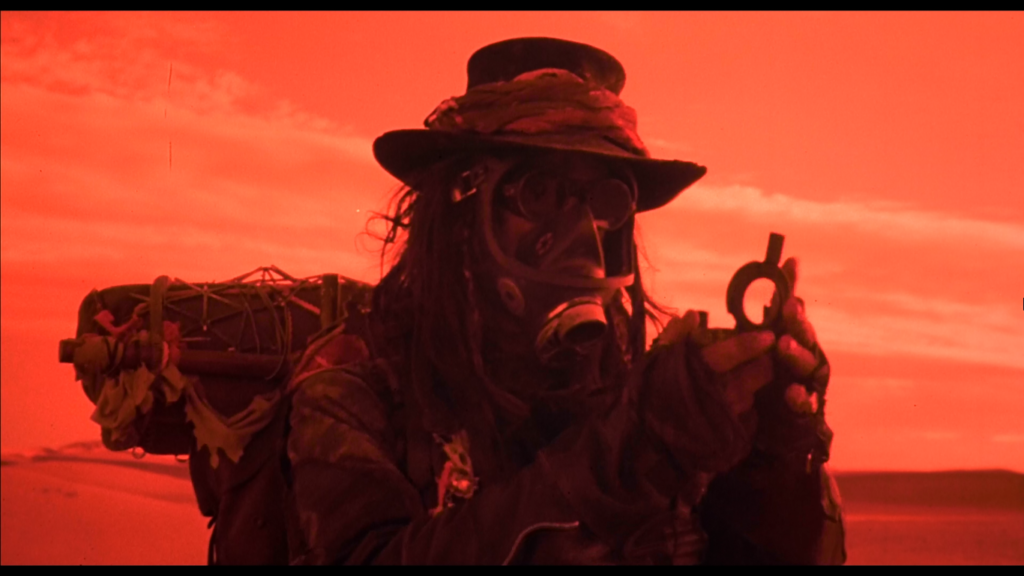
Chivers’ first feature film was Hardware, directed by Richard Stanley, a dystopian sci-fi thriller shot largely by a young crew fresh from music videos. ‘We’d all only really done music videos,” he recalls. ‘They were paying us crap money, so they didn’t have much choice.’ The visual style — heavy shadow, aggressive contrast, deep red tones — became one of the film’s defining characteristics. But it was not without conflict.
‘About three days into it, Miramax saw the rushes and said, “We want it lighter — it’s too dark.” I went to Richard and said, ‘What do we do?’ And he said, “We leave it dark. You’re working for me.” So we left it dark.’
The tension between aesthetic instinct and commercial pressure would become a recurring theme in Chivers’ career. Stanley’s desire to bathe the final act in red light nearly went even further. ‘He wanted it all red for the last twenty minutes. I said, “This is a bit much.” So we compromised. But if he’d had his way, the whole shower scene would have just stayed red.’ Hardware’s second unit was, by Chivers’ description, “a bit hysterical.”
‘Three or four people. Not really that together. They’d have this long list and never quite get there.’ But even amid the chaos, Chivers speaks of the film with affection. ‘There’s some really nice bits in it. I still like it, for what it is.’
The Red Robot Problem
The Mark 13 cyborg — part animatronic, part performer inside a fibreglass shell, was a logistical headache.
‘It was very delicate,’ Chivers says. ‘Bits kept falling off.’ Inside the raised floor was a contorted performer who could only tolerate twenty minutes at a time. It was like a pit stop team. Ten people gluing bits back on while we tried to grab as many shots as possible before he had to come out.’
The trick, he explains, was darkness: ‘If you let the audience think for one moment it’s just fibreglass and a bloke in a suit, you’ve lost it. So you keep it dark.’ A cinematographer’s job, at its core, is perhaps belief management.
Rain in the Desert
The Moroccan opening sequence — sun-blasted desert imagery — was famously not as planned. ‘It poured down with rain. It hadn’t rained in Morocco in thirty odd years.’ The crew encountered flooded riverbeds and a declared national emergency. Half the sequence was rebuilt in a London studio. ‘Half a ton of sand on the floor and don’t show the sky.’ This, Steven shrugs, is film making. ‘Wherever you shoot in the world, someone will say, “It never rains this time of year.” And then it does.’
Why Do It?
Given frostbite in Montreal, flooded deserts, broken generators and collapsing robots, the obvious question arises: Why continue? Chivers smiles.
‘I like the whole process. You get a good crew, it’s a right old laugh. Money for old rope. And I like telling stories in light. That’s the attraction — telling a story in light.’
Unlike many cinematographers, he has resisted directing. ‘Every six months someone says, ‘Why don’t you direct?’ I don’t want to. I like what I do.’
His background explains a lot. He didn’t come up through camera assisting. He came through fine art. ‘St Martins. Goldsmiths. Royal Academy. Experimental cinema. Stan Brakhage, structural film. We all thought music videos were just experimental film with money. And for a while, they were.’
PART II
Dust, Fog, Wind — and “the Queen’s Generator”
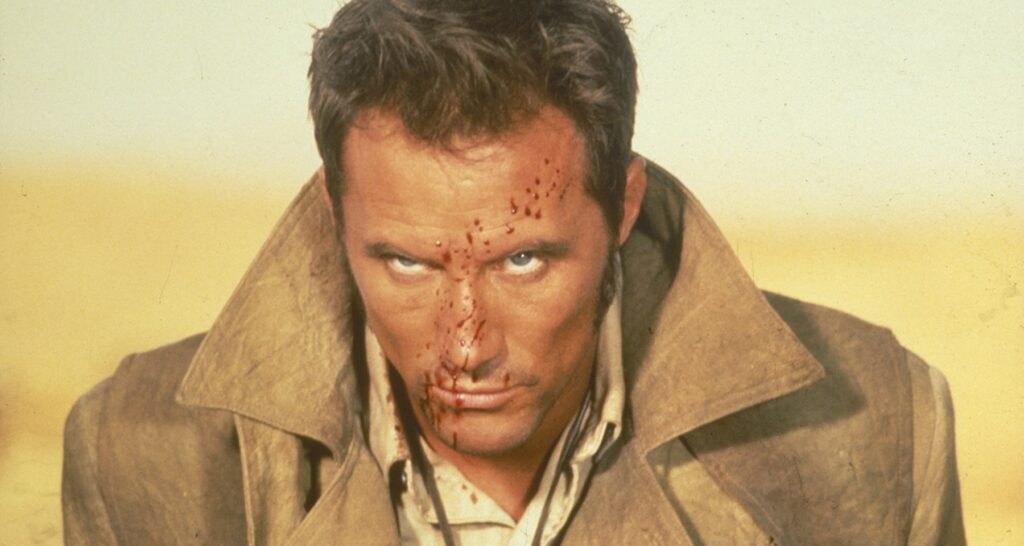
If Hardware was Chivers’ baptism by fire, Dust Devil was a long, sunburned lesson in what happens when ambition meets logistics — and logistics loses. Right away, he frames the core problem as structural: the film had been financed as a certain kind of “African western”, but the production arrived without workable locations in reach, without a sensible base, and with a crew size that turned every move into a military operation. ‘It became this huge monster of a hundred people in the desert… and we went down there and there was like nowhere to shoot.’
He describes the location base as a dead-end strip: one long road, desert either side, and “nothing”. The irony, he says, is that some of the most striking locations were real — caves, rock formations, the kind of landscapes you dream of lighting — but they were too far and too inaccessible to move a huge crew.
‘What we should have done… a smaller crew, a four-wheel-drive convoy, tents… and then we could have got… But we were stuck… and we couldn’t get to where we wanted to get to because it was too far to move a hundred people.’ Desert travel isn’t poetic when you’re hauling equipment.
‘Transporting 50 vehicles over the desert… 49 of them would get stuck in the sand.’ And then there’s the part no one budgets for: the weather that nobody had properly accounted for. ‘On the third day out… there’s this fog… the only desert in the world that has fog… and we all stopped shooting… and [production] is going “Why aren’t you shooting?’’’
At another location, a local politely breaks the news that everyone should already know.
‘One of the locals comes up and says, ‘Oh, you’re down here at the wrong time of year!’… ‘It’s the windy season!’… About midday, it really blows up.’
Midday arrives; the wind arrives; and suddenly nothing works: cameras, reflectors, lights, dialogue. ‘It was so windy… you can’t stand up, you can’t even sort of talk… you can only shoot in the mornings… you can’t shoot in the afternoons because of the wind.’
The schedule was tight – everything built in around a week (masterfully by set designer Joseph Bennett) in a place you can only shoot for half-days, and now every plan has to mutate at speed. And then — because films love compounding chaos — you get the extra “classic” problems: long lab turnaround, the wrong stock loaded, a full day lost. ‘We shot a whole day and then it turns out someone loaded the wrong film. So we shot a whole day that had to be junked. We didn’t get the rushes back for ten days either.’
In the heat, sand gets everywhere. Blood effects meet flying grit. Lenses don’t get lovingly swapped; cameras get swapped like tyres. ‘Blood spurting (based on treacle), flying sand, the cameras completely covered in splattered blood and sand. We basically never changed the lens — we just changed the camera.’
Even the interiors become their own kind of comedy, in this case mental expansion caused by the searing sun. ‘The sun comes out and it starts creaking really loudly. We had someone outside telling us when a cloud’s going over. That’s the only time we can record sound.’
If all this sounds like misery, Steven doesn’t quite play it that way. It’s exasperation, absolutely, but also the affectionate tone and camaraderie crews adopt when they’ve survived something difficult together. Then comes one of those stories that feels like it belongs in a film about making the film.
A generator breaks. After much investigation, it turns out there’s only one suitable replacement in the entire country. Unfortunately, it had been reserved for a royal visit elsewhere. But that was no deterrent to a determined crew member. ‘The Queen was visiting. Our generator broke down and the only other generator was this one they’d got up for the Queen. So we sent one of the drivers and he basically nicked it. Nicked the Queen’s generator.’
He laughs at the image of it: a giant royal emblem on the side and the crew posing with beer like they’ve bagged a trophy. ‘There’s a picture of me standing in front of it, a big Royal emblem painted on the side, and we’d nicked this thing.’ And while he says the director “didn’t even know”, he notes the spirit of it felt very suitable to the production. ‘Anything a bit subversive.’
PART III
Awkward Characters, American Crews — and Why Films Break People
For all the desert insanity, Chivers is careful not to present himself as a victim of “difficult directors”. If anything, he sounds amused by the category. ‘He’s alright (Richard). To a lot of people he’s very difficult, but I don’t mind. I specialise in awkward characters.’
What he’s describing, really, is a clash of film grammar and technique. Some directors are story-first: rehearse, block, cover dialogue efficiently. Others are image-first: the close-up of a finger matters as much as the line reading, sometimes more. ‘There’s a way of making films… and quite often with [this director], the close-up of the finger is more important than the story… and a lot of people can’t understand that.’
He defends it as a legitimate approach — even if it drives the schedule and the suits mad. ‘For all they know… the whole five minute dialogue might go over the close up of the finger.’ The real danger, he says, isn’t eccentricity. It’s the moment the crew loses faith. ‘The minute you get the crew against you… you’ve had it.’
He’s especially scathing about big, rigid, status-heavy working cultures — he describes American crews (and sometimes actors) as intensely serious, intensely procedural, and convinced they’re making the most important thing in human history. ‘They all take it all so seriously… it’s like, forget it… you can actually enjoy what you’re doing… We have a more blasé attitude here, which I think is probably what certain directors need.’
That’s part of why he says he doesn’t want to live in LA. ‘I much prefer a little bit of narrative but I don’t want to live in LA. I don’t want to be part of that system.’
He did his time in the music-video world and speaks about it like a genius training ground that eventually becomes exhausting. ‘It’s a really good training ground but I haven’t done one for ages. I turned two down this week, it’s too horrendous.’
Not because of ego, he says but because it’s young directors cycling through, reinvention for reinvention’s sake, plus the creeping, lingering expectation that the DP will also quietly do the directing. ‘Producers would get you in with an inexperienced director and you’d end up doing everything and feeling really annoyed about that.’
“I really enjoy telling stories. Telling a story in light.”
He’s also very pragmatic about the toll feature films take on life. Six months away, constant travel, back-to-back foreign jobs. Then back to some sort of family reality. ‘You spend six months away… it’s really hard. I can’t live like this. Now if I get offered jobs abroad, I tend to turn them down. I’ve got two kids, you don’t have the freedom of choice anymore.’
In between the chaos and the philosophy, what keeps resurfacing from Steven is film craft: the love of crew, the love of the process, the love of making images tell stories. ‘I really enjoy telling stories. Telling a story in light.’
And maybe that’s why the un-predictable, crazy bits — the fog you can’t shoot through, the sandstorm, the fake blood and flying grit, a cast member having a seizure, generators breaking down and transport hell — don’t factor as complaints. They are testament to the fact that film making is often not a clean, precise or indeed enitrely rational activity. It’s a very specialised art form practised usually under intense pressure, with often highly strung creatives in the real world with real world problems and consequences. But the results are sometimes rather spectacular and wonderful.