NICOLA McAULIFFE
Theatre Royalty
by Andrew Marc
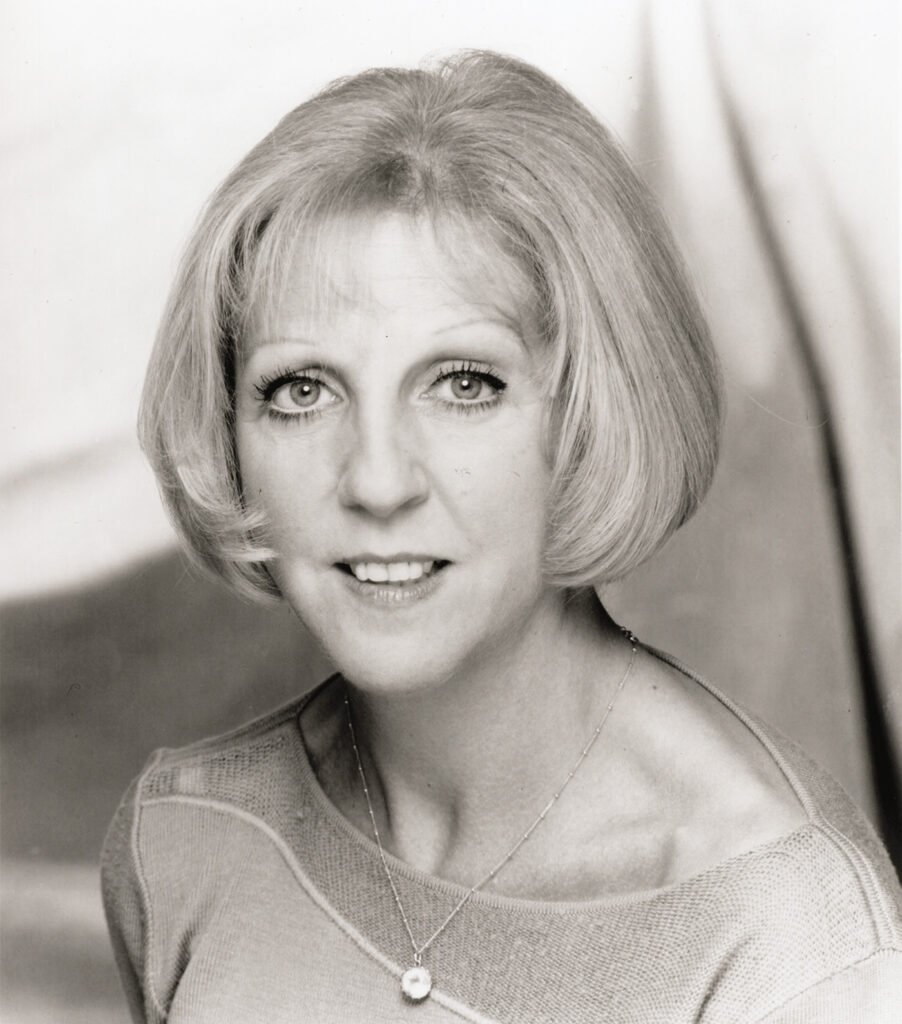
Olivier Award winning actress Nichola McAuliffe is touring her self-penned play Maurice’s Jubilee this year after a sell out run at the 2012 Edinburgh Festival. It’s the second produced play she’s written, her first being the acclaimed A British Subject, a true story of how her husband became the first journalist to interview a man on death row in Pakistan.
She has been in numerous television and theatre productions, and won several prodigious acting awards over the years. On the screen, she is most well known for her character of Sheila Sabatini, the acerbic surgeon in Surgical Spirit. In the theatre, notable roles have been Miss Shepherd in Lady In A Van, Kate in Kiss Me Kate, Katisha in The Mikado and Dorothy Price in Semi-Monde.
Maurice’s Jubilee
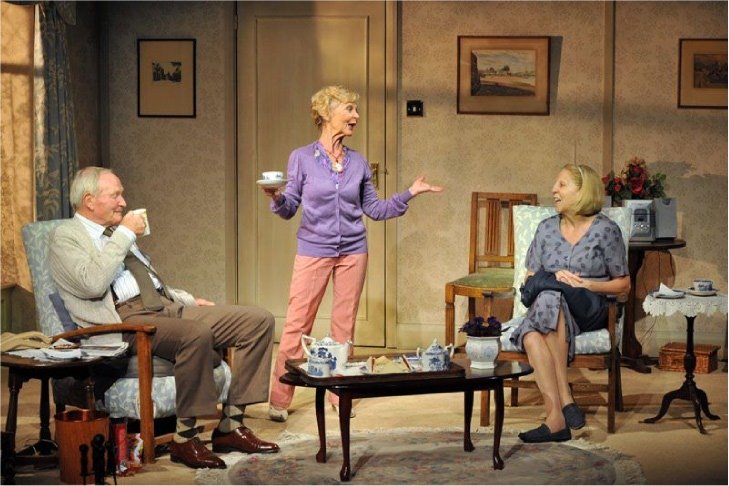
Her latest play, Maurice’s Jubilee is ostensibly a comedy – concerning a terminally ill man about to celebrate his 90th birthday, a day before the Diamond Jubilee. Nichola plays his palliative care nurse, Katy, whom he regales with a seemingly tall tale about how he knew the Queen 60 years previously and is due to receive a visit from her imminently as they had both made a promise to each other back then. His wife believes not a word of it. ‘All she knows is that the night of the coronation, after the coronation, he came home stinking of whisky and talking rubbish and saying that he’d been with the Queen’. Katy, however, is not so sure. It’s an intriguing premise.
‘It was about to come up to the beginning of Jubilee year and I was thinking about it and my mother-in-law had just died as had the father of my ex-boyfriend. I was thinking about their lives and how in their 80s they were so young they had their life ahead of them. They weren’t ill, either of them – they were the same people that they’d been when they’d married. ‘Still in love with their childhood, you know, in their 80s and it intrigued me. And then I was thinking about The Queen and Prince Philip and Jubilee year and all these things.’
The eminent actor Julian Glover plays the husband, and theatre veteran Sheila Reid plays his wife. It’s a three-hander, but not a predictable one by any means. ‘The idea is that when you sit down and start, you think it’s going to be a box set … you think it’s going to be one thing and it turns out to be another. That was deliberate. It was to show that when you look at a person who is older, you automatically make assumptions.’
Acting and the theatre
McAuliffe’s first experience of theatre was when she was taken at age seven to see Laurence Olivier and Ken Dodd – whether at they were performing at same time she didn’t say – but these two widely differing performers obviously left a lasting impression. She was a member of the Greenwich Youth Theatre and an “Old Vic groupie”. Derek Jacobi was playing at the Greenwich Theatre, she knew him as a fan and ended up becoming his dresser while still at school. She learnt an enormous amount in this role.
Nichola also trained at LAMBA (London Academy of Music and Dramatic Art). ‘It was an excellent classical training, and we also had people who had been stars in the 20s and 30s teaching us.’ She also feels learning from established theatre professionals is equally important – a “handing on of the baton”, as she succinctly puts it. ‘We’re now having to do foundation courses for drama school – because students are coming never having seen a Shakespeare play – to get drama students up to a standard of general knowledge in their own specialist subject that they should have grown up with. It’s disrespectful.’
“If you want to be an actor, then you’re going to be an actor from the minute you walk through the stage door for the first time to the minute they cart you out in a box.”
Nichola’s been on film sets with the likes of Kathy Bates, Stephen Frears and Michelle Pfieffer, whom she “watched like a hawk” both for inspiration and instruction. Her main love remains the theatre though. She has no interest in directing, claiming she’s too solitary for this role, finding this trait more suited to writing.
She has a marvellous analogy for the differences between stage and screen acting: “The energy in theatre goes out, the energy in film goes in. It’s like the difference between a star and a black hole – a black hole absorbs energy and that is scintillating on film whereas in theatre you have to send out heat and light.”
Reviews and the audience
‘If the review says it’s very funny, they will come in and they will start laughing from day one, from line one. Before the reviews come out, you won’t get laughs because they don’t know what it is,’ McAuliffe explains.
“ … when you have got a time limit, your hopes dreams and ambitions are exactly the same as they were when you were 18 only now you have doubt put into it.”
‘They are acting as individuals, not as an audience. It is absolutely extraordinary. And the minute the reviews come out – if it says ‘oh, this is great’ … it happened with Maurice. Because its subject matter can be regarded by certain people as sort of sacred turf, you can’t laugh at that or black humour in places, the laughs weren’t consistent, before the reviews came out.’
But of course, if I mention here that The Telegraph said of her new play: “There’s a touch of Alan Bennett in the spry wit she brings to the suburban set-up” or that The Independent said: “… ninety minutes of fine acting and a stream of good jokes” it won’t affect your preconceptions in any way.
The impression and thoughts Nichola would like to leave the audience with are these: ‘I would like them to have walked a mile in Maurice, Helena and Katy’s shoes … the play is saying that the drama happens in the third act, as it does with good drama, and we tend to focus in society and the arts on the first and second act of life.
‘And actually, when you have got a time limit, your hopes dreams and ambitions are exactly the same as they were when you were 18 only now you have doubt put into it. Plus a time limit on your achievement. It makes it more dramatic, and we tend to dismiss the third act of life as being just tying up loose ends and it isn’t.’
SELECTED CREDITS:
(Film)
Cheri (dir. Stephen Frears)
Plunkett and MacLaine (dir. Jake Scott)
(TV)
Surgical Spirit, Coronation Street, Dr. Who, My Family
(Theatre)
Kate (Kiss me Kate), Baroness Bomburst (Chitty Chitty Bang Bang), Miss Shepherd (The Lady In The Van), Katisha (The Mikado), Sybil Thorndike (Plague Over England), The Duchess of Windsor (Untitled), Marjorie (Home), Maggie (Hobson’s Choice), Queen Victoria (Poppy), Dorothy Price(Semi-Monde), Annie (Annie Wobbler), Wicked Fairy (Sleeping Beauty), (Oedipus the King), Herself and various (A British Subject), Katy (Maurice’s Jubilee)
(Author)
Fanny Full of Soap (The story of a West End Musical), Attila, Loolagax and the Eagle, The Crime Tsar
(Awards)
Laurence Olivier Theatre Award (1988) – Kiss Me Kate
Best Actress – Stage Awards for Acting Excellence – Edinburgh Festival Fringe
Best Actress, Manchester Evening News Award – The Wild Duck
Clarence Derwent Award – Poppy
Edinburgh Stage Best Actress Award – Bed among the Lentils