Colin Greenland talks to Andrew Marc
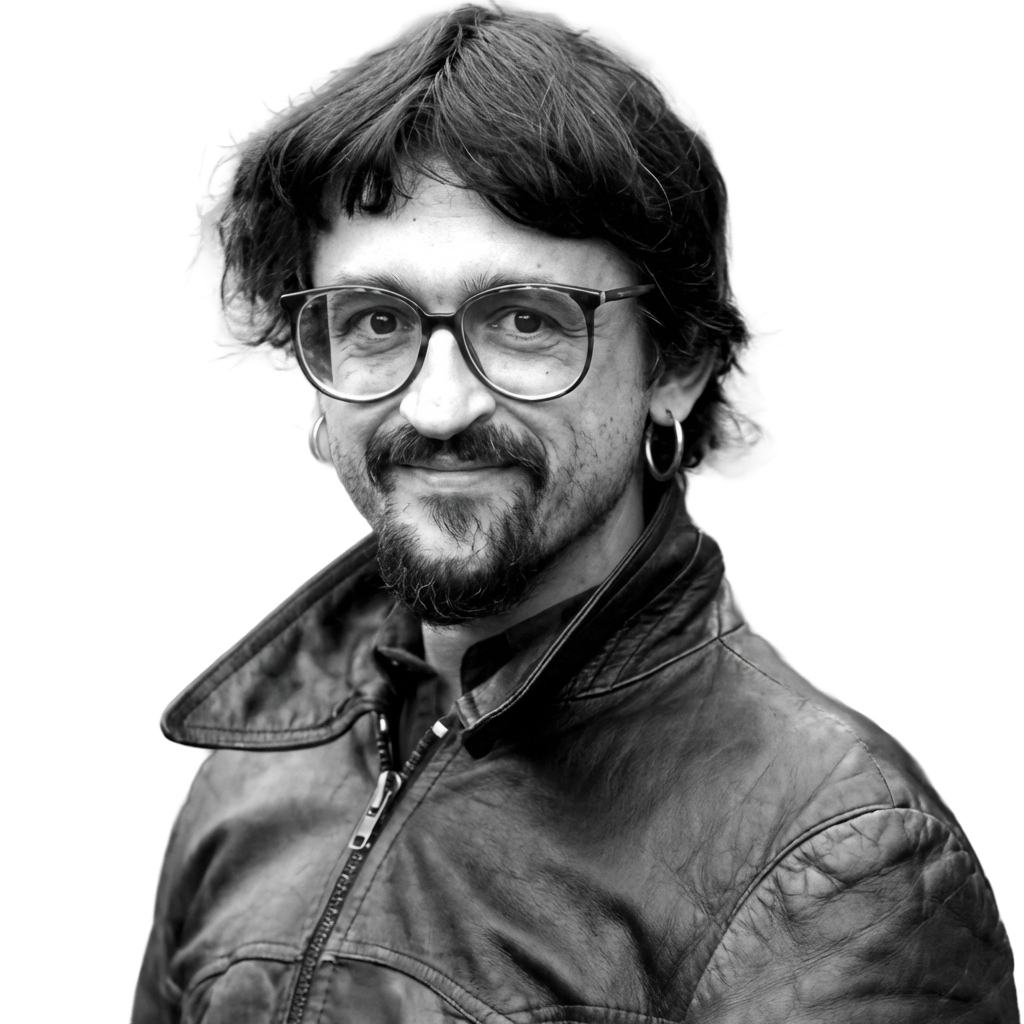
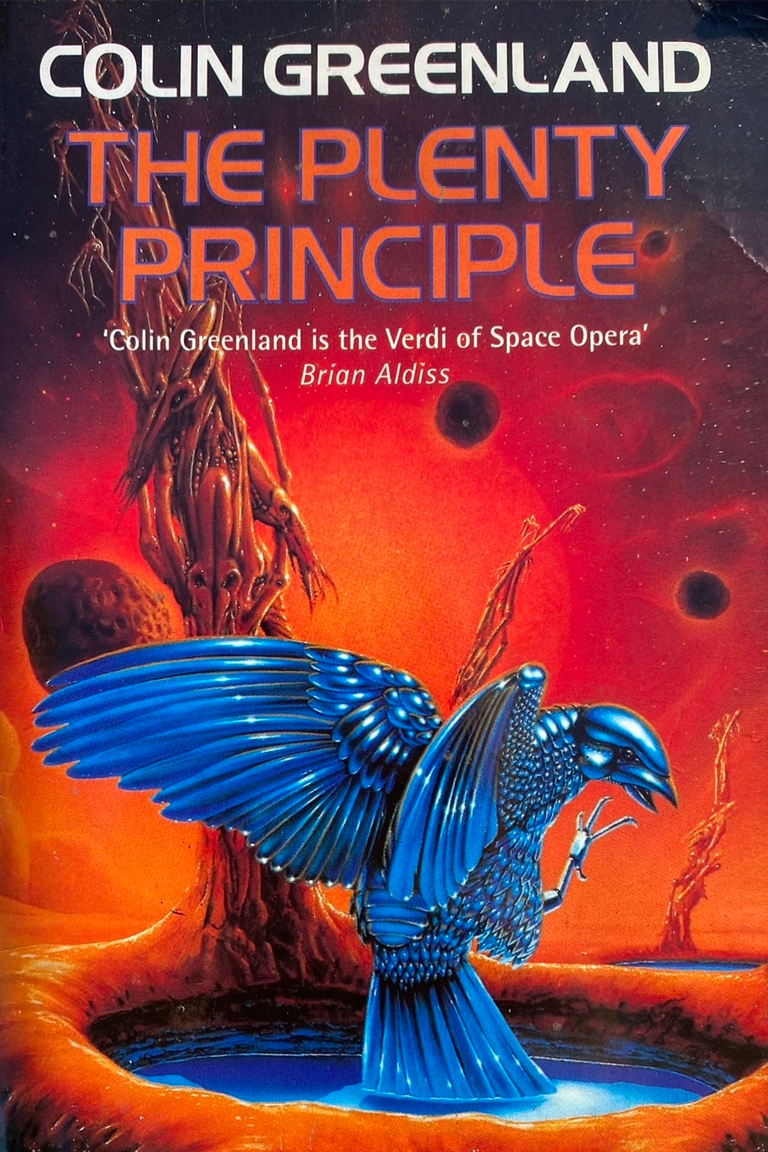
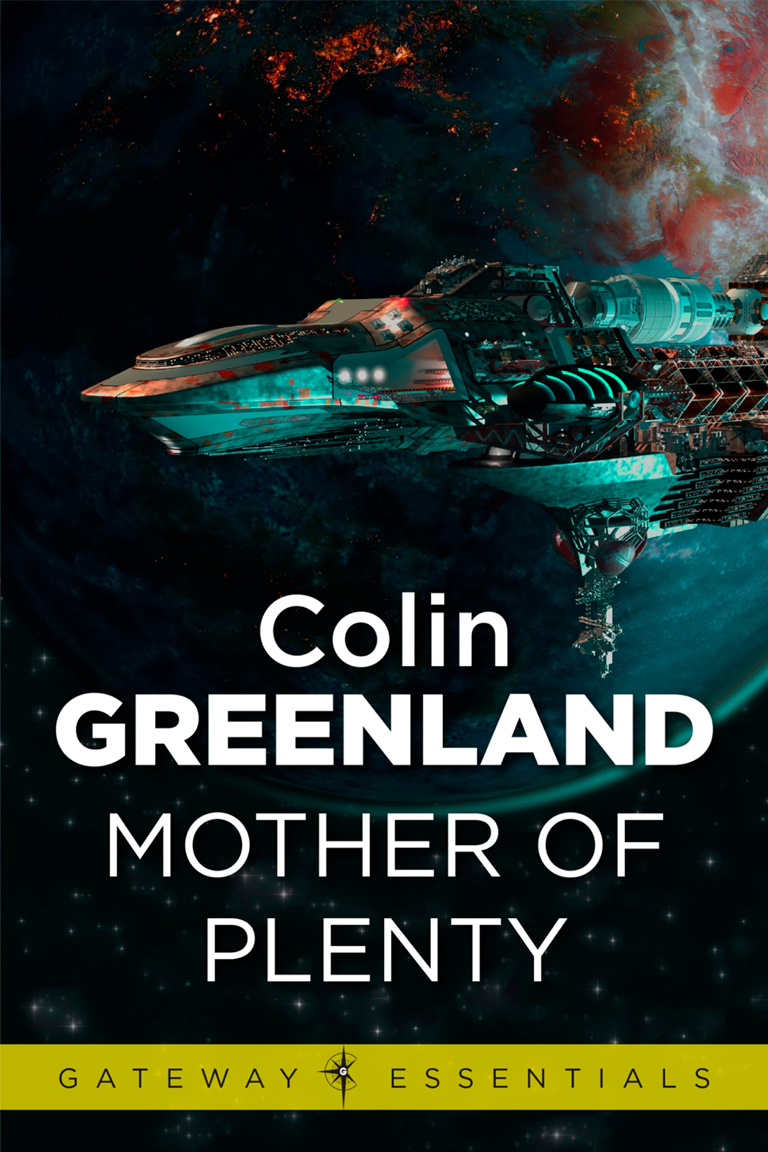
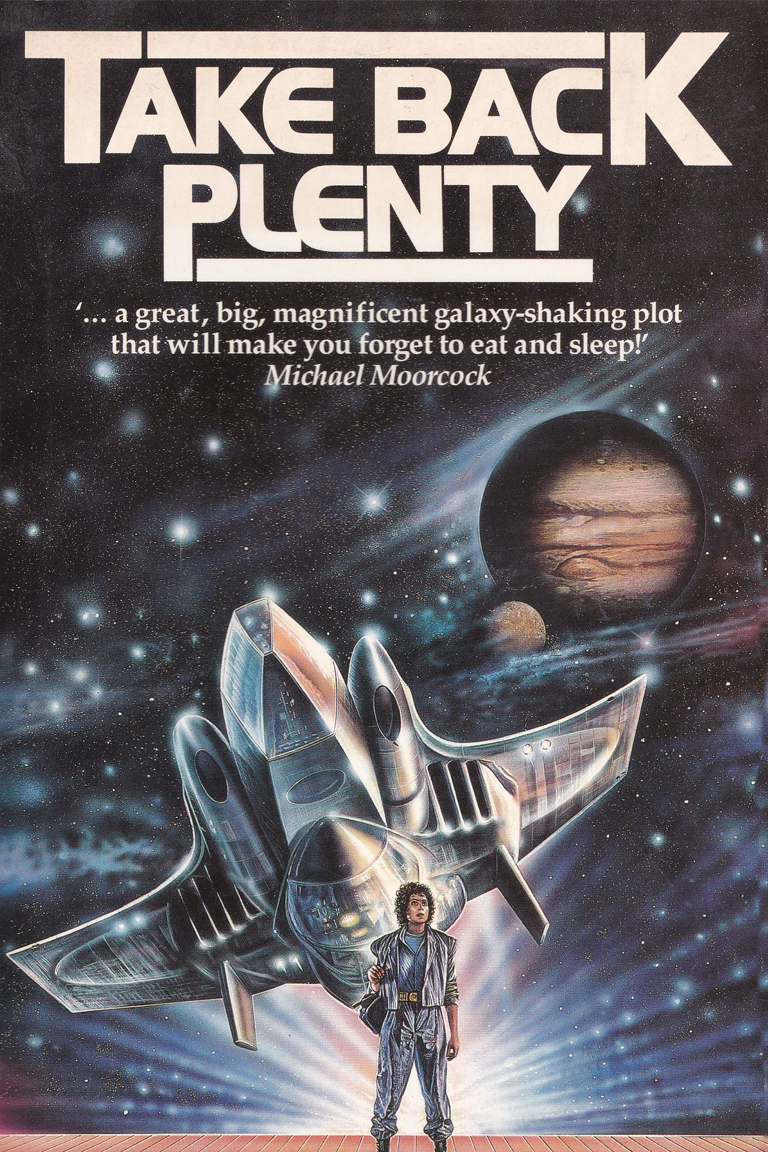
Colin Greenland is a classic British science fiction writer and critic whose work helped define a distinctly literary strain of modern British SF. Educated at Oxford, he published critical writing as well as fiction, but remains best known for Take Back Plenty (1990), the novel that won the BSFA Award and the Arthur C. Clarke Award and introduced readers to the unforgettable Tabitha Jute. He also wrote the Plenty sequence that followed, and has long been associated with the wider British SF scene as both novelist and commentator.
What comes across in conversation is not just intelligence, but a kind of spirited, amused candour. Greenland talks the way that some writers think on the page – very laterally, circling an idea until it suddenly lights up. Asked about science fiction, influence, feminism, violence, classicism, and the burden of “getting it right”, he answers with the manner of someone both inside the genre but also slightly suspicious of all its rules and conventions – which made for a very interesting interview.
Colin Greenland: imagination, instinct, and the freedom of science fiction
Why science fiction? Greenland laughs softly at the question.
‘I don’t really know that I did choose it. I was always interested in books that suggested the world might be something more, or different, than what you could see looking out of the window, looking down the street, or the world that adults taught you you were going to grow up into. I always wanted something a bit more than that.’
As a child, he fed on imaginative fiction of all kinds and saw little point in drawing clear delineations between them. ‘I didn’t really see any distinction between fantasy with spaceships and science fiction with spaceships, and books that purported to be the truth about UFOs. It was something that put the imagination at the centre rather than at the periphery. That was probably what drew me to it.’
He was writing early, long before publication. Some short stories came before Daybreak, the first novel he wrote, and one early Tabitha Jute story won second prize in a Faber competition run with The Magazine of Fantasy & Science Fiction. Before that there had been an even earlier success: a childhood competition in Woman’s Realm.
‘You had to write a story about a diamond necklace, a snowman and a spade, and I did, and I won a paintbox,’ he recalls. ‘Oh, great, wonderful. My dad wrote to Woman’s Realm and ordered lots of extra copies.’
When he began writing novels, though, the influences were not straightforwardly “science fictional”. ‘It was more fantasy at that stage. When I was writing Daybreak, I was very influenced by Mervyn Peake… and by Richard Adams’s Shardik, which was extremely important. The same sort of society, the same kind of mythological concerns — trying to write something about mythology as a living force in a pre-industrial society.’
These days, he says, he reads less science fiction than many might expect. ‘Since Take Back Plenty, since the awards, and really feeling that I’d turned the corner and found what I wanted to do — and that people wanted to read — I’ve read much less science fiction. I’m much more interested in crime fiction on the one hand, and literary fiction on the other. I’m more interested in seeing what else I can bring to science fiction from outside.’
Partly that is artistic self-protection. ‘When I’m writing science fiction then I definitely don’t read science fiction. You get very transparent when you’re writing — your nerves are very close to the surface. Very easily influenced, easily swayed. Either I get impatient with my work because it’s not what I’m reading, or I get impatient with what I’m reading because it’s not what I’m writing.’
Writing itself, as he describes it, is far from romantic. ‘It’s very laborious when you’re writing. An anxious process. It’s not speedy. It’s not fun very much at all. It’s mosaic work. It’s written in pieces.’ There is pleasure, certainly, “when it goes right in the end”, but in the meantime there is frustration, doubt, and the need for an outside eye. ‘I need help. I need my editor. I have to produce a draft which nobody else will see until my editor’s read it, and then I rely very much on her as a second opinion, to help me see what I can’t see because I’m too deep inside it.’
He does, however, need a clear destination. ‘I always know where the book will end, even if I don’t know exactly how that end will be achieved.’ He grins at the memory of sketching out Take Back Plenty: ‘I knew the Cappellans were in Carion and I knew that somehow the plot would get there, and I knew there would be some kind of big battle, or something. In the outline I just wrote: “Pyrotechnics ensue!”’
That mixture of planning and instinct seems core to his method. He outlines the arc, then chapters, then scenes — but leaves room for intuition and surprise. ‘I’ve got to have something to aim towards or I will wander off into the wasteland and get lost,” he says. “But on the other hand I’ve got to leave myself room to be surprised.’
The image he returns to more than once is artistic. A chapter, a side-scene or a small diversion in tone which can alter the whole composition. ‘Stick a blob of red in somewhere, and it suddenly shifts the whole tonal value of the whole thing.’
That extends to his handling of plot and violence. He rejects the idea of adding drama as a cynical crowd-pleaser. ‘It’s not like an ingredient that I add afterwards because I think people will like it. There is always violence. I regard that as part of the genre that I’m working with.’ Popular fiction, he suggests, offers one way of confronting violence imaginatively, rather than merely rationalising it. ‘Our lives can be very boring, staid and mundane in this culture, and yet at the same time the world is a very violent place … fiction is one of the ways of contemplating violence and holding it.’
One of the most notable features of Greenland’s fiction is the prominence of women, and when asked about it he is both thoughtful and wary of sounding agenda driven. ‘I’m more interested in people who have to live in the universe as it is, than people who define the universe,’ he says. Adventure fiction and science fiction have historically been full of men who take control, men who set out on quests, men who save the world. ‘I’ve never saved the world,’ he says dryly. ‘And I don’t think I’ve ever met anyone who has.’
For him, life is more often about surviving in structures built by others. ‘That’s more like the lives of women in society than it is like the lives of men.’ But he also gives a simpler answer, and perhaps a more revealing one. ‘I know a lot of women that I like and love and admire, and I want to write about them.’
Feminism matters deeply to him. ‘Feminism is very important to me. It was the first political analysis that made any connection with life as I knew it. So I’m somebody who is very grateful for the work that was done. But I don’t start out with a programme. I don’t start out saying, “I must write a feminist novel.” Not at all. I start with a character.’
That emphasis on character sits alongside an frankness about limitation. ‘I would like to learn to write about people I don’t understand yet much more.’
His characters often begin in stereotype and then they rebel against it. ‘You start with your bit part – a cyber-cop, metal helmet and plugs in the back of the neck – and by the time you’ve written the second paragraph about him, suddenly he’s got a home life, hopes and ambitions and wants to be a rock and roll guitarist.. He laughs. ‘I love surfaces when they break down.’
That can create structural problems of its own, of course because minor characters could begin demanding major emotional space. Greenland talks with about one such problem in The Hour of the Thin Ox, where a death many readers found shocking taught him something technical but profound. Not that he had made the violence too abrupt, but that he had failed to shift the reader’s emotional investment to the right character soon enough. It is exactly the kind of subtle creative issue he finds endlessly difficult but also and endlessly worth pursuing.
Asked where all those wonderful names come from, especially the ships in Harm’s Way and Take Back Plenty, he admits to being a magpie. ‘Everything I write is bits that I’ve picked up which get taken out of context, and changed and turned around and put in the book and given a fictional home.’ The Raven of October came from an old Roxy Music lyric. Another ship name might exist simply to suggest a larger outside culture. ‘A useful name will give you associations, cultural associations, which will bring stuff that you want in the book… without putting it in the foreground.’
The ship Alice Liddell, he explains, was not always called that. It began life, rather wonderfully, as the Dolly Parton, which he eventually abandoned for obvious legal and associative reasons. Greenland realised, eventually, that almost all the books he was writing after the first were, in some sense, versions of Alice in Wonderland.
‘There was always the story of a young woman who was picked up in the world that she was born in and was supposed to inherit, and she suddenly found the world was different. She was living in a universe run by grotesques who told her what to do and what to believe, and they all contradicted themselves, and she had to figure out who she was in this world and survive whatever people were throwing her through.’ Their total disdain is brutally apparent when they state: “Who cares for you? You’re nothing but a pack of cards.”
For Greenland, that model matters more than stricter traditions of epic fantasy. ‘For other people it might be The Lord of the Rings,’ he says. ‘For me it would be Alice in Wonderland.’
He is wholly unperturbed by accusations of scientific inaccuracy and is perfectly happy writing a Venus full of poisonous reptiles if that is the Venus the story requires. ‘It’s not the real Venus. It’s a science fiction Venus.’ There is, he argues, a great imaginative inheritance in the genre’s old impossible planets, and no reason to surrender them simply because science has literally mapped the reality. ‘Everybody else is writing about the real Mars which leaves me perfectly free to write about the traditional Mars.’
Colin has little patience with the notion that science fiction must confine itself to approved modes, approved technologies or approved levels of realism. ‘I don’t want to avoid it,’ he says of generic furniture — hyperspace, weaponry, inherited tropes. ‘I want to make it mine.’
He recalls being told, early on, that the old ways of writing were no longer available, that certain things could not now be done. He was unconvinced then, and remains so. The health of the genre, as he sees it, lies precisely in its refusal to become self referencing doctrine.
‘I think science fiction must do everything,’ he says. ‘Everything it possibly can, including the things it hasn’t thought of yet.’
On contemporary science and technology, his view is nuanced. He is less interested in starting from science itself than in characters living through technologically altered worlds. Though is clearly delighted by the feedback loop between science fiction and scientific culture, especially in computing, cybernetics, virtual reality. Scientists and theorists, he notes, often come from the same cultural mix as the writers: the same music, the same comics, the same books and articles. Boundaries between subcultures may still exist, but they are much more flexible than they were.
However, he remains suspicious of grandiose claims about a “new consciousness”. He has heard them before. Somewhat better, perhaps, to say only that we are in a fertile and creative period, one in which the old separation between science and the arts has broken down into ‘a million cultures, or there’s one.’
For all his devotion to science fiction, he is honest about its weaknesses. The average novel may be better written than it once was, he says, but the genre still has work to do on the subtleties of self awareness and introspection. ‘I still think there is a lot of stuff that science fiction is not good at yet… the insides of people’s heads… the moral sensitivities and delicacies. Moral in the sense of how do people live, how do people behave.’
On film, he is equally practical. He would happily write for the screen, just not adapt one of his own novels. He fears too much compromise and too much butchery of the source material. He relays Neil Gaiman’s marvellous line about adaptation: ‘You know they’re going to barbecue your baby, but that doesn’t mean you have to help them.’ Better, Colin suggests, to join a project from the ground up, to build something collectively rather than watch your own invention be dismantled in the name of production needs.
Novelisations, on the other hand, interest him more. Not necessarily just as a commercial venture, but as technical exercise. ‘Somebody else would give me a plot that already existed, characters that already existed, and it would be my job to turn them into words. So many decisions would already be made.’ The idea appeals because it goes against the usual burdens of invention. It would be, he says, ‘a good exercise for my writing brain’.
Then comes the surprising caveat: no heavy research.
‘I hate doing research. Research gets in my way. Research tells me what my obligations to the world are, and puts obstructions in the way of my imagination.’ He will find something out when a sentence absolutely requires it and not a moment before.
He is a highly intelligent and technically sophisticated writer, and has great respect for the genre but also passionately defends his artistic right to fictional freedom within the genre, perhaps break the unspoken rules, which is why his books stand out where others just blend in with the crowd.