Danny Kushlick and the Case
for Ending the War on Drugs
Interview by Andrew Marc
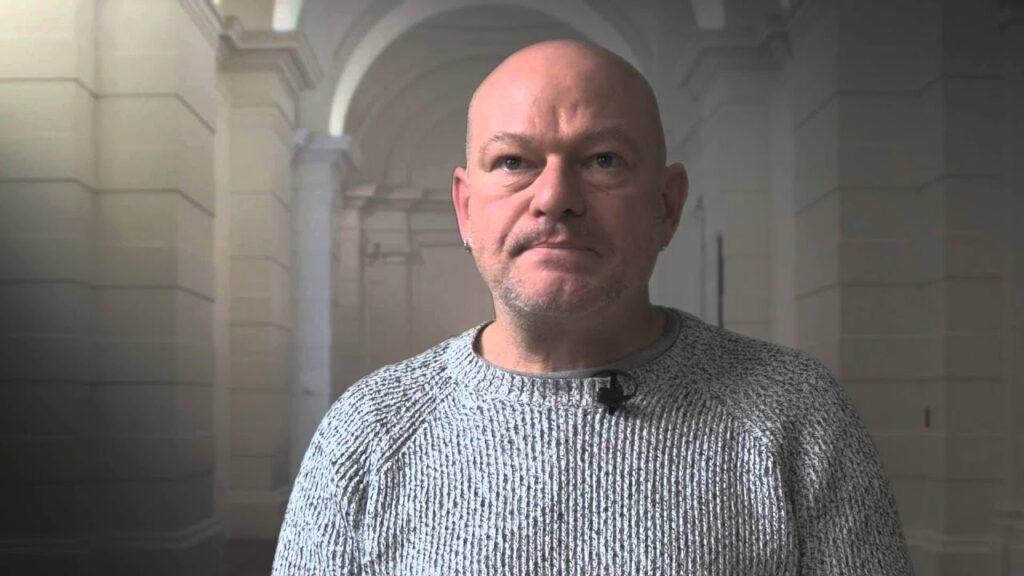
Drug policy is one of those political arenas where almost everyone agrees the system is failing — and yet almost nothing changes. Arrests continue. Markets adapt. Deaths climb and shift location. Politicians rehearse the same lines, decade after decade, as if repetition can substitute for outcomes.
Danny Kushlick has spent years pushing against that inertia. A former drugs worker in criminal justice settings, Kushlick founded Transform Drug Policy Foundation in the mid-1990s, building it into a UK-based charity known for a single clear proposition: prohibition isn’t “tough”; it’s catastrophic — and the alternative is legal regulation.
Transform describes its mission in similarly direct terms: campaigning nationally and internationally for “a just and effective system of legal regulation for all drugs”, supported by research, policy development, and public education.
When I spoke to Danny, he wasn’t trying to shock for attention. He was trying to cut through the mainstream propaganda and the established norms — the way drug policy debates get stuck on morals, labels and fear rather than what actually reduces harm.
“No-one in the UK will listen to us …
apart from the Lib Dems.”
At the time of this interview, Kushlick had been watching the politics of drug reform play out in a familiar way: privately acknowledged, publicly avoided. ‘We’re up for strict regulation and control alternative, because it’s the only alternative from where we sit.’ Asked whether Transform was advising policymakers directly, he was blunt about Westminster’s reluctance. ‘Certainly not in the UK … no-one in the UK will listen to us, apart from the Lib Dems… The UK is very tied into the US drug policy.’
For Kushlick, that’s not a communications failure, it’s a cost-benefit calculation. Governments can keep “getting away with it”, so they do. ‘The issue here is at which point does the enforcement on the war on drugs actually create a big enough crisis that it become more costly than it is beneficial — and let’s face it most of the benefit [is] political and not real… Governments are always happy to spend money doing really dumb stuff… it’s not to do with the outcome, it’s to do with whether they can get away from it.’
ORIGINS
Transform wasn’t born in a think-tank. It began in frontline work — probation, prisons, and the “heavy end” of crack and heroin use.
‘I set up Transform in the mid 90s when I was a drugs worker in Criminal Justice… working with heavy end crack and heroin users on probation and then did some prison work… and it became clear to me that one of the significant problems faced by my clients was the fact that their drugs were illegal… it was actually the cause of a lot of their problems or exacerbated a lot of them.’
Danny went looking for an organisation that would challenge prohibition directly — and found a vacuum. ‘When I began to look around for an organisation that was campaigning for an end to the war on drugs… there wasn’t one.’ So he built one.
‘A few years after working on it on my own as a voluntary project, we got funding, and set up an NGO. Which in 2003, we got charitable status, and then have grown basically since then. We’re now one of the leading drug policy think tanks.’
Transform’s identity, in his view, is deliberately uncomplicated: ‘It’s really simple… We’re very clear… the problem is the war on drugs. Legal regulation. And that’s what makes us unique… We’re just very clear.’
PUBLIC vs POLITICIANS
A common defence of prohibition is that “the public isn’t ready”. Kushlick rejects that. ‘If you look at the polls, the polls are moving inexorably in the direction of reform… upwards of 50% of the population support the decriminalisation or legalisation of cannabis… and about 20%… support the legalisation and regulation of all drugs.’
The public, he argues, can handle evidence. The blockage is political courage — and the conditions that force political movement. To explain what it might take, he reaches for a historical analogy: US alcohol prohibition. ‘The key… was the economic crisis… the government was desperate… to raise alcohol revenue… [and] the public had lost confidence… It wasn’t working.’ He also points out an effect that repeats across prohibitions: ‘Prohibition inexorably leads to stronger preparations… which [is] why people were drinking hooch and moonshine.’ For Kushlick, that pattern matters because drug prohibition also pushes markets toward potency and risk, while handing supply to organised crime.
THE PORTUGAL MODEL
When asked about the so-called Portugal model, Kushlick draws a sharp line between decriminalising possession and changing the supply system. ‘Portugal hasn’t legalised or regulated anything. It decriminalised possession, which is a very different issue.’ His argument is that the central problem is supply being ceded to criminal markets.
‘The issue was supply… [they] had to… enable the state… to take over the administration of production and supply again… after 12 years of gifting it to the US mafia. That’s going to be the case with the re-legalisation and regulation of currently illegal drugs. States will take over the control, production and supply from international organised crime.’
It’s not an appeal for a free-for-all. It’s a proposal for controlled systems — what Transform itself describes as legal regulation tailored to risk. Medicine, hypocrisy, and the “levelling of the playing field”. The interview turns, as many drug conversations do, toward medicine — and the uneasy truth that society already tolerates (and profits from) potent drugs when they travel through sanctioned channels. Kushlick goes straight at what he sees as the moral contradiction.
‘It absolutely is hypocritical. Allowing the aggressive marketing by pharmaceutical companies of very, very potent drugs… through dealers who are otherwise known as doctors, and then locking people up for supplying people… using drugs for… fun… or to deal with pain in a fairly shit world.’
His core proposal here is strikingly modest in tone: treat drug use as a health and human issue, not a criminal identity. ‘What we’re calling for is a levelling of the playing field… why isn’t it OK for pharmacists and doctors to also look after the people who are effectively self medicating, but in the illegal market?’
And he adds a professional challenge: ‘It goes completely against the Hippocratic oath that doctors don’t speak out against prohibition … It has an overwhelmingly disastrous impact on some of their most vulnerable patients.’
MONEY AND POWER
Kushlick doesn’t sell reform as enlightenment. He sells it as an eventual inevitability, driven by pressure, budgets, and self-interest. ‘It won’t happen because medics suddenly realise, it won’t happen because politicians become liber, it won’t happen because the police suddenly realise. The reason it will change is because somebody either sees a buck in it, or sees that it is too costly to be running it this way.’
He’s candid and justifiably cynical about where tipping points come from. ‘There aren’t that many major political decisions that have happened because of enlightened liberals… the way the world works is predominantly related to money and power.’
At the time, he was making a confident prediction that economic conditions would accelerate reform — the kind of statement that reads, years later, like a marker of where the debate was. ’I am taking bets now that this will happen before 2020… I don’t think it’s sustainable.’
He extends the analysis globally, arguing that prohibition is also an instrument of geopolitical influence — particularly for the United States — and that the endgame may involve the US being “last to fall” if other countries move first. ‘Europe already is leading the way … Portugal and Czech Republic and Spain… [and] most Latin American countries have decriminalised many years ago… the pressures… are coming from all over the place… eventually the regime will collapse because of lack of support.’
Near the end of the interview, Kushlick’s tone shifts. It becomes less structural, focusing on the humane aspects of it all. The kind of society we want to be.
‘Transform is a long standing rational voice… and will continue to push for change because we want to remove one of the most catastrophic social policies… and put in place a system which will enable us, ultimately, to forget about drugs as an issue and begin to deal with people.’
He insists on two truths at once: most drug use is non-problematic, and a minority of people will struggle — and neither group is helped by criminalisation. ‘To recognise that drug use is not a problem. The vast majority have fun without causing themselves difficulty … but there is a minority who will have significant problems … those people are not helped by becoming criminals and the rest of the world is not helped by criminalising the trade.’
His closing point is simple, and it’s hard to argue with.
‘It’s about people, what works, what is just, what is compassionate – recognising that people have used drugs for thousands and thousands of years … and given that that’s the reality, you better find a way of managing production and supply. They’re not sub-human — it’s us! It’s us! We need to look after each other. There are more of us out there … we are prevailing. We’re winning.’
The views expressed in this interview are those of Danny Kushlick at the time of publication and do not necessarily reflect the views of the publisher.