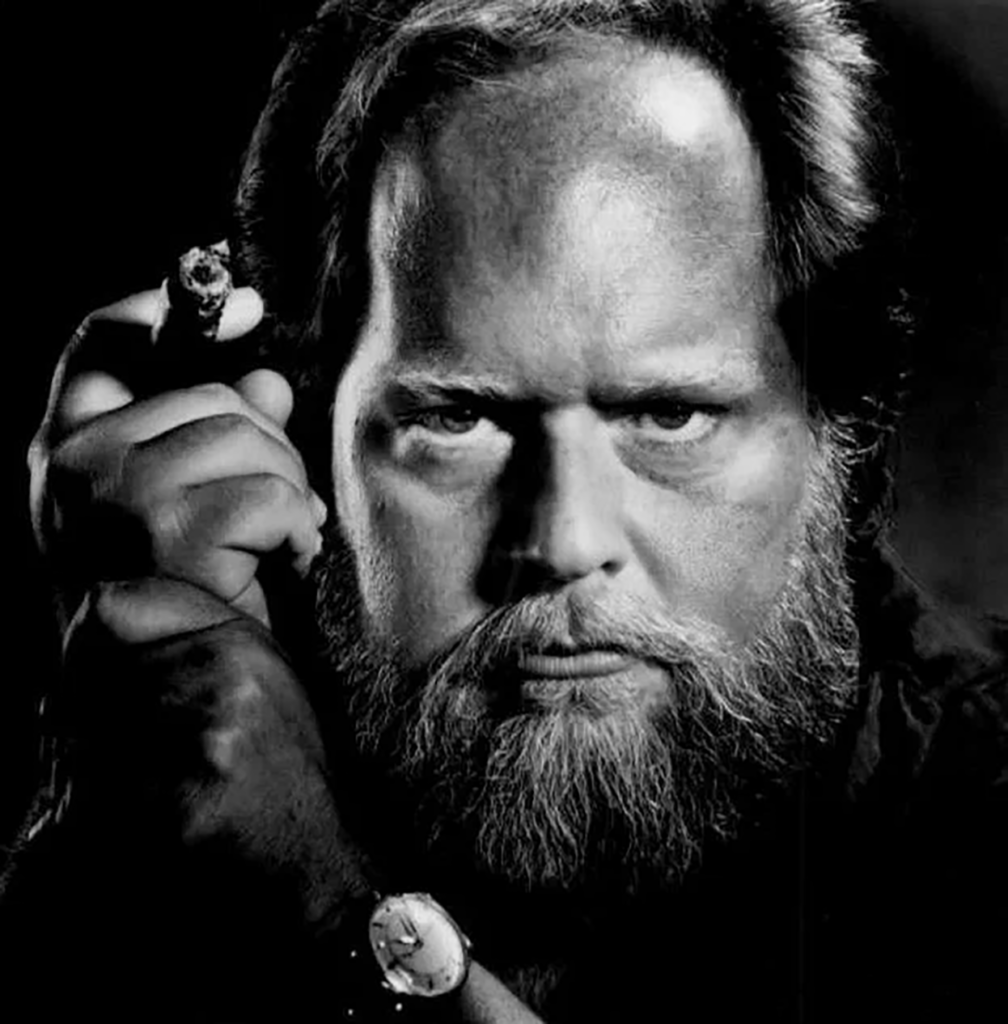
WILLIAM HOOTKINS
Interview by Andrew Marc
William Hootkins was an American character actor whose career bridged Hollywood spectacle, European art cinema, and British theatre. Born in Dallas, Texas in 1948, he attended St. Mark’s School of Texas alongside Tommy Lee Jones. He then studied astrophysics and Oriental studies at Princeton University before committing fully to acting — a craft he would later describe as a “laboratory for studying human behaviour.” After graduation, he trained at the London Academy of Music and Dramatic Art and acting at Theatre Intime.
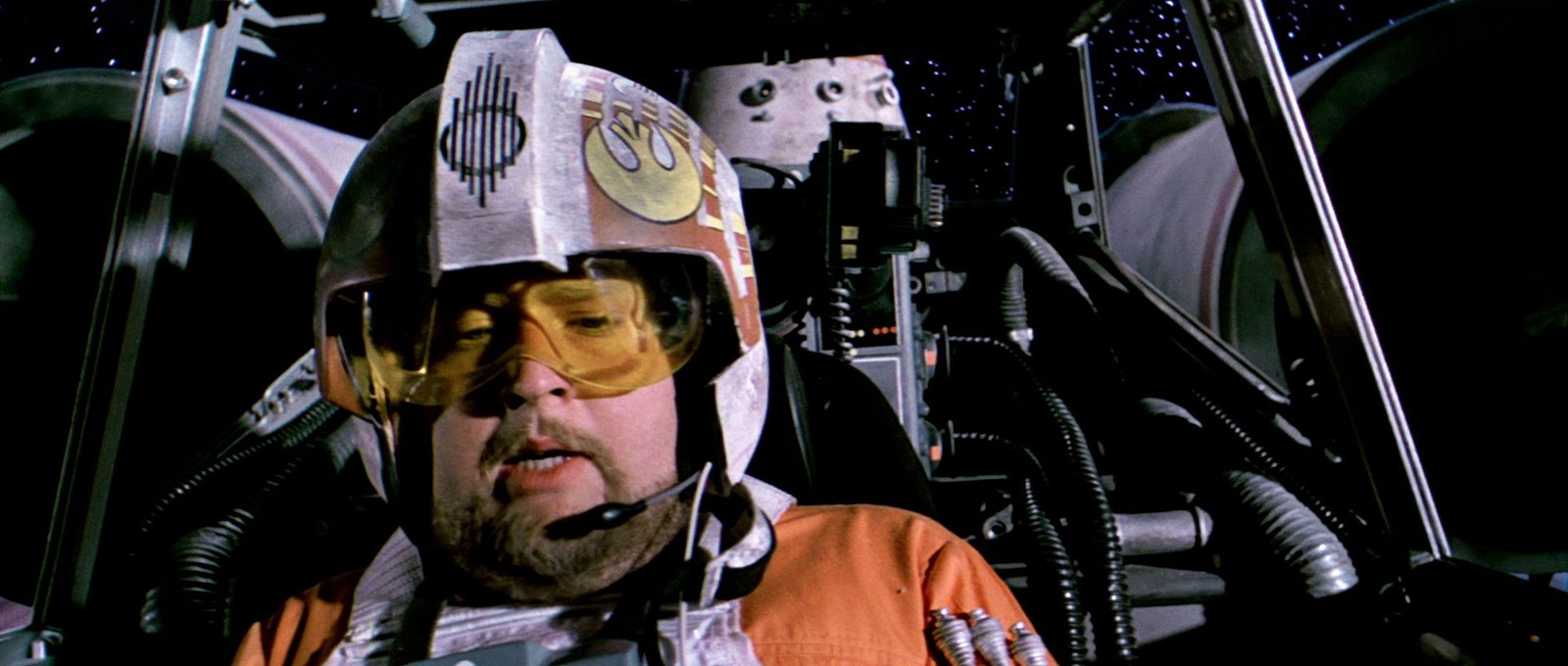
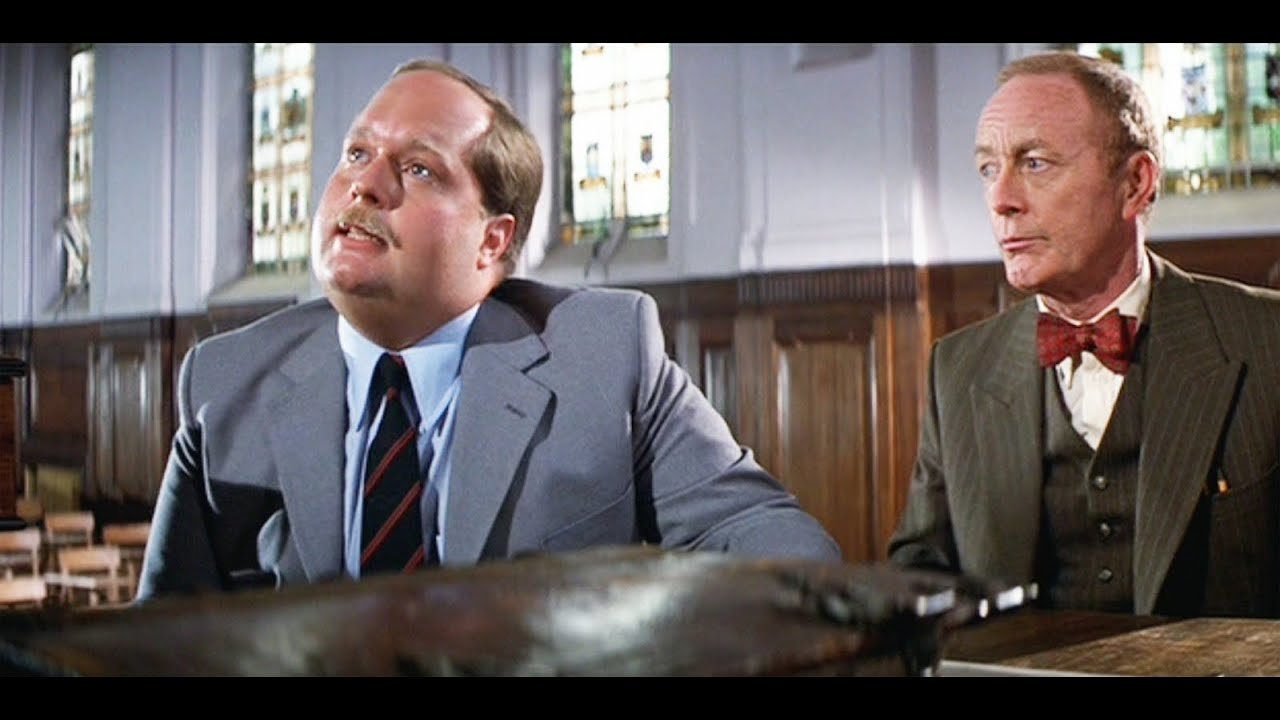
After early stage work and training, he moved into film in the 1970s, appearing in Twilight’s Last Gleaming and quickly establishing himself as a distinctive screen presence. International audiences would come to recognise him as Rebel pilot Porkins in Star Wars, followed by roles in Raiders of the Lost Ark and later as Alexander Knox in Batman. His imposing physicality, sharp intelligence, and gift for vocal work made him equally at home in genre blockbusters and more offbeat productions.
Alongside mainstream studio films, William built a rich body of work in Britain and Europe, collaborating with directors drawn to darker or more unconventional material. His performances in Hardware and Dust Devil for director Richard Stanley revealed his willingness to explore extreme psychological terrain, while his stage work — including acclaimed performances in regional theatre — demonstrated his technical precision, particularly with dialects.
By the time of this 1997 interview, Hootkins had appeared in more than thirty major films across the United States and the United Kingdom, earning a reputation not only as a memorable screen actor, but as an erudite, linguistically gifted craftsman deeply engaged with philosophy, science, and the intellectual underpinnings of performance.
Richard Stanley: vision, anthropology, and the strange places it comes from
“To me as an actor, that’s how I learn about
the human animal — through its extremes.”
It begins, as many eccentric film stories do, with wardrobe. Joseph Bennett (the set designer) was “perfect” for Richard, Bill says; “almost as crazy as Richard is.” Bill remembers Joe’s look changing “weekly,” but not in the way you’d expect. ‘Like Richard, he didn’t change his suit weekly,’ he laughs. ‘You could tell exactly what colours he was using on his palette… As each day went by, new colours would be added to his expensive linen suit.” By the end, Bennett was “walking around” in his whole palette. ‘I suppose it made life easier — he could say ‘Give me two quarts of this’ — and point to his suit.’
But for Bill, the costume gags are just the window dressing. What he keeps circling back to is the idea that Stanley’s real value isn’t simply that he’s unusual — it’s where his unusual comes from. ‘Richard is absolutely unique,’ he says, and that uniqueness doesn’t stop at the films. Still, “it’s his movies that I’m most interested in,” because “his value is that no-one else is expressing in that way.”
He’s blunt about the wider directing landscape. ‘All of the current crop of great directors — they’re all quoting earlier films.’ Spielberg, Zemeckis, and others: ‘their own childhood references are motion pictures of the 30’s, 40’s and 50’s, which they then restate in better terms.’
The language of cinema becomes a kind of inherited grammar. ‘They’re picking up the language of cinema that was developed classically by other people… writing new novels using the same grammar.’ He laughs about the theft being clever, sometimes even brilliant. ‘James Cameron steals directly from Eisenstein, shot by shot.’ The famous “three jump cuts in” technique for instance. ‘The reason Eisenstein did it is (a) he was a genius, and (b) he didn’t have zoom lenses. So he did the three jump cuts in which James Cameron uses all the time to great effect with exactly the same progression of frame sizes as Eisenstein used on his hand cranked camera.’
Stanley, in Bill’s view, is different because his references aren’t only movies. ‘Whatever generates that vision, beliefs, background, they generate a unique vision which he tries to express in film.’ Bill’s shorthand for it is wonderfully simple. Stanley’s head is full of “a diverse world.” Anthropology, myth, the “back waters, the little eddies of human thought.”
‘The world of Anthropology especially is one that is very fecund, and has never been tapped by film makers really.’ He name-checks Frazer’s The Golden Bough and Joseph Campbell’s work on myth — not purely as academic, but because, for Bill, this stuff connects directly to what cinema can do when it stops imitating itself. ‘Campbell has shown us the power of myth. That Mankind’s earliest myths actually reveal humankind’s subconscious. And Richard is using that, and no-one else is.’
“This is good shit! I might need a transcript!”
It’s also a shared personal crossover, an appetite for the esoteric. ‘An education like mine allowed him to investigate the back waters, the little eddies… the little streams that lead nowhere except in circles, off the main river of human knowledge, which is also an interest of mine. You know, the more esoteric, the more bizarre!’ Bill says he learns about people from what’s extreme — not necessarily “dangerous extremes,” but revealing ones. ‘To me as an actor, that’s how I learn about the human animal — through its extremes.’
Doesn’t that knock you off-centre? ‘I’m afraid the centre is what the human animal is telling me it should know about itself. Therefore I mistrust the centre.’ He’d rather triangulate from opposites: ‘I would rather take the two extremes and find a midpoint between them. The mean, running down the middle rather than the mid point that I’m being given.’
And then he does what he does best which is turn a theory into a story you can’t forget. He talks about early market research in American advertising — Schlitz beer, psychologists, the blunt discovery that people buy beer “because they want to be drunk.” The company tries the honest campaign – celebrities holding cans saying: “Drink Schlitz! It makes you drunk!” And it implodes. Badly. ‘The sales of Schlitz not only dropped, they stopped!’ The second round of research reveals the real mechanism. People want the effect, but not the admission.
‘People buy beer because they want to be drunk, but they don’t want to think that’s why they’re buying beer. They want to think they’re buying beer because it makes them look cool, women more attracted to them – higher income group.’ That’s why Bill distrusts the mainstream narrative. ‘Always what it’s telling me it’s about — is usually a cover up. And it’s in those strange little whirlpools on the side, that you find a clearer window to the rocky bottom of human existence.’ He pauses, delighted with himself. ‘This is good shit! I might need a transcript!’
Hardware and Dust Devil: craft, chaos, and the actor’s job
“She fell back against the wall, and started sliding
down the wall, but kept the boom out of shot
the whole times until she hit the floor.”


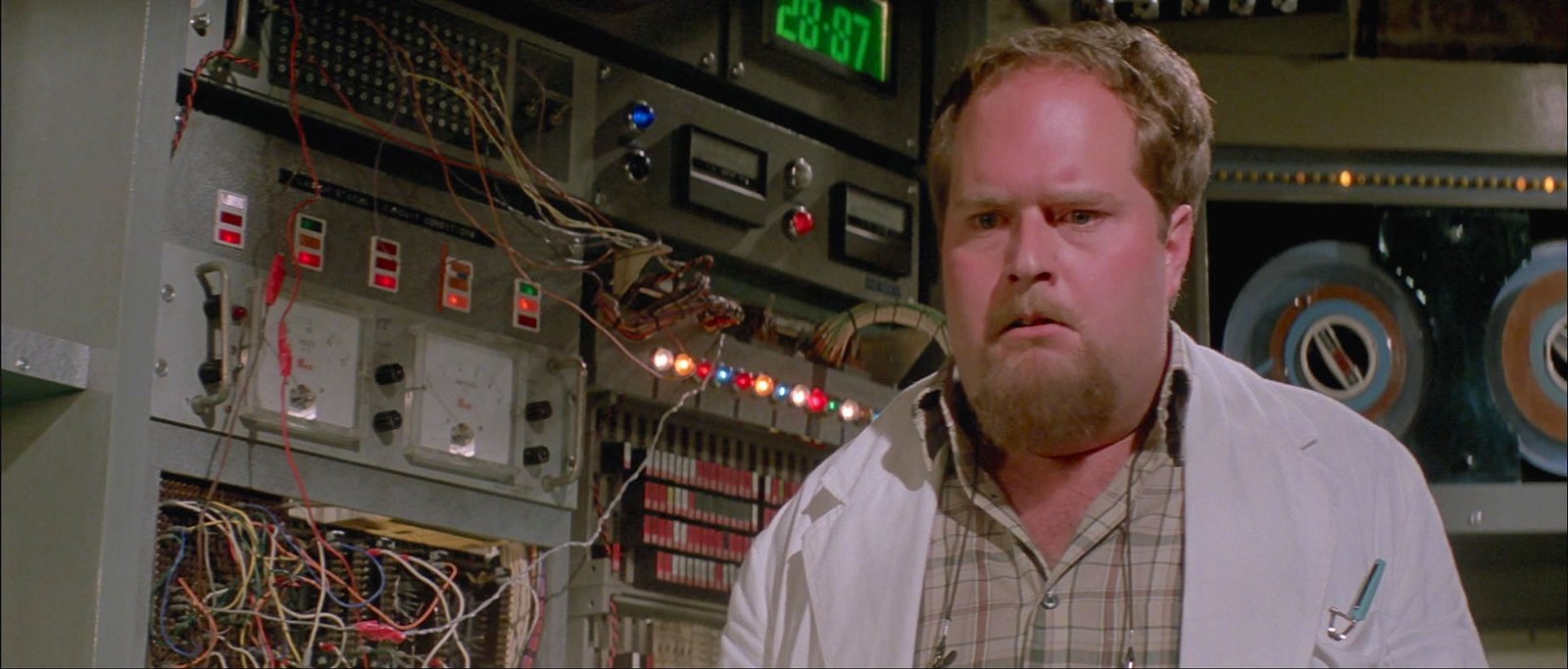

If Stanley’s big themes are myth and anthropology, his working method — at least in Bill’s memory — is a mix of childlike intuition and alarming faith in the actor’s imagination. Their first meeting for Hardware is “one of the most amusing interviews of my life.” Bill didn’t even know what the part was. He wore “one of my worst Hawaiian shirts.” As it turned out, “it was a good choice.”
Stanley had seen him somewhere — Bill thinks Bad Timing — and mostly, in the audition room, ‘he mainly giggled and just stared at me, just stared with those eyes of his.’ It’s a funny image. Hootkins, a big presence, perched on a stool “the size of my fist,” in “a tiny office,” while Stanley radiates quiet intensity. When the role starts to take shape, it appeals to Bill for a reason that’s almost alarming in hindsight.
‘At that time I was very anxious to explore the lowest depths – the scuzziest, weirdest most extreme character that interests me.’ Stanley didn’t have to persuade him much. ‘He encouraged me and allowed me. I was actively ahead of him on this. I was determined to make this just the most … I wanted to go as far as it was conceivable to go in the lowest … plumbing the lowest depths of the human specimen. That job cured me. I’ve never had an interest in doing that kind of character again. In fact, I never have done that kind of character again. It’s back to ties. Ties and leather shoes.’
The first day on set doesn’t ease him in. It throws him into the deep end with a scene that becomes some sort of twisted cultish legend: the filthy video-phone call. Stanley yanks him out of make-up — “gluing more herpes scars… plumped up sultanas super-glued to my upper lip” — and says there isn’t really a plan, because that’s Stanley. ‘Oh, we’re going to come and do a shot. I would kind of like to know what. I just want you to ad-lib the worst phone call you could think of.’
Bill tries to warn him. ‘You do not want me to do the worst!’ He’d heard things. LA answering machines, wrong numbers, “the most revolting, disgusting” calls “embedded in my memory.” He begs for moderation. ‘You may want me to do half as bad as I can think of.’ Stanley insists: “No, I want you to do the worst.” Bill’s response is classic Hootkins — both comedic and dead serious. ‘I can think of things that will have us all in jail — you won’t even get an X rating!’ Stanley waves it off. “No, no, it can’t be that bad.” Bill: ‘Richard… it is! It’s worse!’
So he does it. And as he’s performing, he notices something most actors aren’t meant to: the crew. Specifically, the boom operator — “a large, muscular, powerful, gorgeous woman.” And in the middle of the take, she faints. ‘She fell back against the wall, and started sliding down the wall, but she kept the boom out of shot the whole time until she hit the floor.’ Even in collapse, she stays professional. Bill swears it’s true.
Years later, he says he heard a rumour about lawyers and ratings. ‘Harvey Weinstein told me later that they spent some seventy thousand bucks on a lawyer just to keep an X rating with that phone call in.’ He laughs, but the implication is clear. Stanley’s sets can be darkly subversive, but the work leaves a mark.
Dust Devil is a different kind of labour. A much more personal project of Stanley’s. Bill plays “the mythological creature — a South African policeman with a heart of gold.” The accent becomes his personal war. ‘I consider myself a good dialectician. I take it very seriously. Piles of tapes … study religiously.’ But Afrikaans defeats his normal toolkit. ‘I found Afrikaans accent to be the single most impossible dialect.’ None of the usual techniques helped.
His solution is both extreme and brilliant. He tries to learn the language first, then “speak back into English from an Afrikaans point of view.” ‘I spent more hours, more time, more heartache, more ear trouble… more paid informants, more unpaid informants… I could have gotten a University degree out of just that accent study.’
He even gets a masterclass from an actor friend at this very table. The advice is half linguistics, half absurdist image: imagine “three generations standing out in the Velt, in the burning sun, wearing a three-piece wool suit, and a leather hat, living on Biltong – after three generations, how do you think you’d sound?” Bill’s conclusion: “It is impossible!”
There’s a nightmare line from Dust Devil that haunts him. ‘I spent an entire week on one line, and it’s still not right… ‘Where are you taking my favourite pin ball machine?’ He begs Stanley: “Richard, can’t it be Pac-Man!?” It’s hilarious, but it’s also the sound of an actor taking craft extremely personally. Perhaps obsessionally. The hours, the stress, the self-humiliation all in service of one believable vowel sound.
And it’s not only the work, it’s also the place. Namibia, he says, is genuinely otherworldly. ‘You are on another world, when you’re in the great Namib. You are on another planet.’ That setting changes people, and it changes the film culture around them. On serious projects, he argues, the whole crew becomes a kind of tribe. ‘Each film is a unique culture. And it helps everyone’s commitment if they identify with the themes of it.’
He recalls a Ken Russell production where David Warner played Wordsworth — and lived it. ‘What did he do day and night? He was up in his room writing poetry.’ The set becomes an atmosphere and start behaving in theme. ‘They’re getting into the whole ethos and that’s good for a film.’
On Dust Devil, the weirdness isn’t just “hoo-ha.” It’s a by-product of location and myth and youth and boredom and belief. And then comes the story that, for him, reveals Stanley most clearly — not as the eccentric auteur, but as the man behind it.
Stanley casts a local extra with an extraordinary face. Normal people with “extraordinary physical appearances.” Nobody realises why the man looks unusual: he has “serious epilepsy.” Then the set turns on a strobe effect for a morgue scene. The man has a seizure. ‘It ruined the shot, and it upset a lot of people. A very spectacular fit apparently.’ Bill didn’t see it happen — he was outside the door — but what follows sticks with him. Stanley is “inconsolable for a week.” He believes he has hurt someone. ‘Richard was in a state of clinical shock. I had to keep grabbing him and going “It’s not your fault”.’
Reality twists the knife. In hospital, the man comes out of the fit. ‘He had the best day in his life! He said ‘Was I good in the shot?’ He was happy as a clown!’”’ Stanley still can’t shake the guilt. ‘That showed me how truly sensitive he is hyper sensitive.’ The mysticism is one thing; the real edge is another. ‘The minute something happens that’s actually on the real edge, Richard takes it very, very deeply. Too deeply.’
The film industry: money, power and directors
“Over 30 major motion pictures the most you can expect
from a director is maybe they won’t fuck you up.”
If Stanley is defined by vision, the film industry around him is defined, in Bill’s telling, by hierarchies and unspoken rules. He sees Stanley’s biggest weakness as almost tragic, because it’s avoidable. ‘All of the trouble could have been avoided if Richard had managed to spend one week on another director’s film set.’ Not to steal style but to learn the human mechanics. ‘A hot house of political intrigue with so much money at stake … Richard was a babe in the woods.’
That flows into Bill’s wider view of directing actors — which is, bluntly, depressing and surprisingly cynical. ‘Over 30 major motion pictures the most you can expect from a director is maybe he won’t fuck you up.’ A director who actively improves your performance is rare. ‘Four or five of those directors, most are auteurs busy making a movie.’
He offers a line that sounds like a joke until you recognise the brutal truth behind it. ‘One reason you pay high money for a cast is so you won’t have to talk to them.’ The higher your fee, the fewer questions you’re allowed to ask. You’re being paid, essentially, to be self-sufficient.
And then comes one of his greatest anecdotes: the day he had to chase George Lucas around the Star Wars set because he didn’t know what species he was. ‘I had to actively follow him around for 20 minutes to get him to tell me whether I was playing a human being or not! I like to know the species!’
He’d seen pictures of aliens and make-ups and “my character’s name is Lieutenant Porkins,” and he’s thinking: am I going to get a snout stuck on my face? ‘I thought that might alter my performance if I had a hairy snout.’ Lucas finally tells him: “Yeah, you’re just a guy.” Bill’s verdict: ‘Which is as far as the directing goes.’
He’s not necessarily bitter about it; he’s realistic. Some directors communicate in tiny signals. He describes Franklin J. Schaffner’s approach: say good morning to every actor, no matter what. ‘He made it his business to say good morning. you may never, ever hear another thing from him the whole day.’ But that one greeting means: I see you. I’m on your side. I’m busy. Don’t derail the machine.
And then we’re back to meta-language — to how the best directing can be “uh, huh” and still be everything. He tells a story from his first film, watching Robert Aldrich give actor Charles Durning a key to an emotional scene. pure gesture, pure sound: “Hum? Hum!” (two fingers pointing to each eye). Durning replies in the same private dialect. Then Aldrich runs off.
‘Charlie knew what he meant. I knew what he meant.’ And when Bill watches Durning’s performance, he understands what happened. ‘It was all in the eyes, just before tears appear. it was wonderful.’ Bill thinks Stanley wants to be that kind of director. ‘Richard would like to be. Richard still just goes ‘haa hah hee hee.’ He should use the fingers more.’
Bill’s view of actors behaving badly is also more nuanced than the usual “diva” story. When he talks about other actors struggling in Namibia, he doesn’t moralise. ‘There are some people who should travel, and some people who shouldn’t.’ Some actors can’t relax in unfamiliar countries, and the discomfort leaks into “game playing” outsiders misunderstand. Complaining about orange juice or trailers isn’t always indulgence, it’s power choreography. ‘It’s a way of establishing power roles (and) very necessary.’ A star once taught him: throw a tantrum on day one to establish boundaries early. ‘You save time that way.’
Science, language, superstition and why
acting is his laboratory
“If I stopped acting, started getting the shakes,
irritable, I couldn’t actually deal with the world.”
Bill’s mind keeps returning to systems. Languages, symbols, cosmologies. He talks about Stanley’s anthropology not as an aesthetic, but as a way of seeing the world. Iconography matters. ‘He understands the power of things, thanks to his mother. The indigenous people’s world view. Outside of it, you call it mysticism … what it is their cosmology.’
Bill’s own route into that thinking is linguistics. He loves the way language frames reality. His example is so simple it’s almost unsettling. A hand and an arm. He gestures: ‘We see two objects, my arm and my hand.’ Russians, he claims, ‘see one limb because the word is the same for hand and arm.’ So perception itself is invoked by vocabulary.
‘Because the language determines your perception.’ Extend that far enough and you arrive at his refusal to dismiss indigenous cosmologies as quaint. They’re not wrong or ignorant but they’re coherent inside a different linguistic and cultural reality. ‘It doesn’t mean that one is right and the other is wrong, it just means that they’re separate realities.’
I mention the my concern about reductionism — the temptation to explain everything in purely scientific terms. Bill’s bigger fear is almost the opposite: pseudo-science. ‘I’m much less worried about the difficulties in reductionist theories than the rise of pseudo-science and superstition — that worries me much more.’ He recommends Sceptical Enquirer and argues that as religion fails and science seems unsatisfying, people become “all too easily led into anti-science.”
When I asks the obvious question — why acting? Bill gives one of the clearest self reflections in the whole interview. He didn’t go to university to become an actor. He went to study astro-physics, and wanted Chinese linguistics too. But he discovers something physical about himself. He can put those passions down for months, and “no great harm came to me.” Acting is different. ‘If I stopped acting, started getting the shakes, irritable, I couldn’t actually deal with the world.’
He doesn’t romanticise it as spiritual, he describes it as method. ‘It’s the same as astro-physics, as linguistics, as archaeology. It’s a way of studying humanity.’ And then he defines theatre in a way that feels like his whole worldview in one take: ‘The theatre I always define as a laboratory in which we study human behaviour. We are looking at ourselves, actively investigating the nature of our own humanity. Mankind is the proper study of man, and theatre, acting for me, is one of the most efficacious ways of studying humankind.’
This interview is dedicated to the memory and work of William Hootkins.